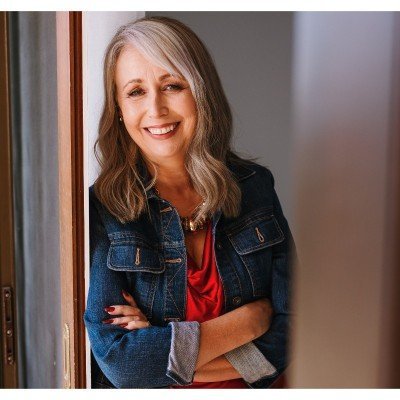
Rachael McConnell
“It's not just good ethics, it's also good business.”
Rachael McConnell has been named to the Talent 100, Class of 2026, the annual award recognizing up to 100 leaders in each category of talent acquisition. Honorees are nominated by peers or found by committees that look for excellent work wherever it happens, then chosen for the depth of their craft and their impact on hiring. This is Rachael's story.
The verdict came in early and it was blunt: too upfront, too kind to ever be good at sales. Rachael McConnell went on to set the record for deal sizes among Yelp account executives in the first class. Then came the callbacks, customers unhappy with the service they had bought, and a growing sense that the numbers were not adding up to anything durable.
That tension, between performance and purpose, has organized everything since. Today Rachael runs a consultancy, launched with support from an organization that also supplied the homegrown sourcing software in daily use. The through line from the Yelp sales floor to the consultancy is a conviction that talent work only functions when the person on the other end of the email is treated as a person and not as a pipeline stage.
The Recruiter Who Made The Job Look Obvious
The pivot began with an observation rather than a plan. Looking around at the people encountered during the Yelp years, one stood out: the recruiter who had brought Rachael in for the account executive role. Here was someone who spent the day talking to people and helping them find dream jobs. "I want to do what she does," Rachael remembers thinking, and the search for a way in started with cold calls to anyone who might know something.
A mutual connection at a head hunting agency opened the door, and Rachael is candid about the low barrier to entry: agencies are generally happy to get almost anyone in the door. The results arrived fast. Joining Randstad as an executive recruiter for legal, Rachael became the second top software producer across the United States for the firm within the first year, and one of the top ten on the West Coast. The traits that were supposed to be liabilities in sales, directness and warmth, turned out to be the core competencies of the job.
The Scarf
Ten years on, Rachael still cannot recall the candidate's name, and somehow that makes the story better. Early in the recruiting career, Rachael placed someone in a mid to late career role. The candidate called in tears, then mailed a scarf as a thank you. Holding it that day, Rachael understood the gesture mattered without yet grasping how much. Understanding the scale of it took years.
The scarf has survived every move and every new city. A 15-month-old baby now plays with it, and the object has acquired a second life as a reminder that recruiters are participants in someone's career story, and by extension in how a family gets supported. The candidate whose name is lost has become, in Rachael's telling, a stand-in for every candidate since.
That ethic shows up in decisions that cost money in the short term. Rachael has lost count of the candidates told, in effect, that the background is impressive but this particular job is not the right one. If someone will not be happy years down the road, the placement reflects badly on the recruiter and leaves the candidate in a position that is genuinely hard to survive.
Dictionaries, SpellCheck, And The Human Double Check
Rachael's framework for artificial intelligence starts in grade school. Teachers once insisted that a bad speller had better memorize the words, because nobody walks around carrying a dictionary. SpellCheck settled that argument. AI, in Rachael's view, belongs to the same category of shift: a tool the industry will lean on for generations, and refusing to learn its full potential amounts to failing yourself. "We might as well start carrying dictionaries around again."
The practical case is scale. AI lets small recruitment teams operate at volumes that were previously out of reach. The caveat is that any system needs a human double check. Rachael has read resumes with sentences that clearly nobody wrote, including the occasional unedited "insert company name" that gives the whole thing away. The same failure runs in both directions. A new outreach flow once went out with a placeholder still in it, and Rachael caught it after a handful of messages had already sent, then wrote back to the recipients and owned the mistake outright rather than pretending it had not happened. The lesson was not to retreat from the tools. It was that there is still a human behind them. Strip the human interaction out of human resources, Rachael argues, and companies simply manufacture bad candidate experiences faster. Marrying AI with people, in that formulation, is how the future of talent gets built.
Slow Down, Then Send The Email
Rachael's advice to other talent leaders needs no preamble: slow down and remember that candidates are people. Teams optimize flows and shave time off every pipeline step, and in the process become jaded about the fact that each email and each rejection lands with someone whose story is unknown. The recipient may have been searching for months and be deeply frustrated. The recipient may need the job to feed a family. With layoffs and restructurings spreading across sectors, Rachael frames the moment as one that calls for empathy and for balancing speed with mindfulness.
The argument is not purely moral. As the face of a company, Rachael contends, caring a little more on the front end produces candidates who remember the organization and want to work with it later. Ethics and business interest point in the same direction.
That instinct for recognition extends outward. Given the chance to name a peer worth watching, Rachael answered instantly: Brandon Littlejohn, Chief of Talent Acquisition at California State Parks, described as a Black leader from a non-traditional background who has revolutionized state recruitment and leads with diversity and intention. West Coast by habit and New York by family, Rachael talks about the industry's best people the way the scarf gets talked about: as evidence that the work is worth doing carefully.
The Talent 100 exists to celebrate the people shaping the future of how the world hires, and few embody that better than Rachael. We are honored to welcome Rachael McConnell to the Talent 100, Class of 2026, and grateful for the experience, perspective, and craft they bring to this community. Congratulations, Rachael. Welcome to the Talent 100.
About the Talent 100
The Talent 100 is an annual list spotlighting the leaders who push HR and talent acquisition forward, organized by Noon AI. Honorees are selected through peer nominations and independent selection committees. Selection is entirely merit-based, with no fees or pay-to-play requirements.