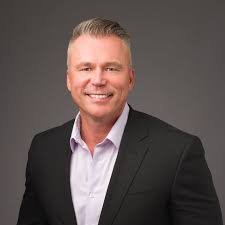
Martin Rowinski
Boardsi
“There are people on top that step on people to get up higher. And then there are people on top that reach down a hand and pull you up with them.”
Martin Rowinski has been named to the Talent 100, Class of 2026, the annual award recognizing up to 100 leaders in each category of talent acquisition. Honorees are nominated by peers or found by committees that look for excellent work wherever it happens, then chosen for the depth of their craft and their impact on hiring. This is Martin's story.
Martin Rowinski went looking for a board seat and discovered that the search firm he needed did not exist. He had spent years as a CTO and operator, had just finished a consulting engagement in which he roughly tripled the size of the company he was advising, and wanted his next chapter to look different: a seat as an advisor or board member, with equity attached, so that he would share in the value he created rather than walking away at the end of a contract. What he found instead was a market gap. No recruiting firm specialized in placing advisors and board members. So he went back to the partners from a previous venture, and together they built Boardsi.
An Operator Who Became a Recruiter
Rowinski is candid that he did not arrive in talent through the usual doors. His background is tech-heavy: chief technology officer work, a long stretch of management, and consulting on the side. That last consulting engagement was formative in more ways than one. It was the first company he grew at scale, and, as he tells it, the first he grew with gratitude deliberately built into how he operated.
The perspective matters, because it shapes what Boardsi is. Rowinski was not trying to build a better version of an existing category. He was trying to serve a candidate he understood intimately, because he had been that candidate: the senior operator who has already proven he can grow a business and now wants a seat at the table where the decisions get made. Executive search has always placed leaders into companies. Rowinski built a company around placing them onto boards.
The bet has held. Boardsi has employees who joined at the very beginning and are still there more than eight years later, a retention figure that most high-growth companies would trade a great deal for.
The Circle That Carries the Weight
Asked to name the leaders who shaped him, Rowinski does not reach for a list of famous recruiters. He reaches for his friends. He is direct about the fact that his path has included real loss, both professional and personal. He was in the mortgage business in 2008, with everything that implies. Not long after, he and his family lost his seven-year-old stepson.
What he credits, without hesitation, is the group of close friends he describes as brothers, many of them high-level executives, who helped him carry the weight. That experience taught him what he now calls the power of gratitude, and he began putting it into practice in his work almost immediately.
It also gave him a sharp read on one of the tired axioms of executive life. Loneliness at the top is real, Rowinski says, and he knows people living it. But he thinks it is a consequence of selection, not altitude. There are people who climb by stepping on others, and there are people who climb and then reach back down. "You got to choose your circle," he says. "And if you choose wisely, you'll choose the right circle, people that will pull you up. And then if you do get up higher than they do, then you just got to reach down and pull them up." He describes it as a continuous effect, something passed along rather than banked.
The Hybrid Model
Boardsi uses AI, and Rowinski is unembarrassed about it. What he refuses to do is hand over the decision. He calls the company's approach a hybrid model: AI carries the heavy load, the volume work, the processing that no human should be doing by hand. But the matchmaking itself involves people.
His objection to full automation is not nostalgia. It is that every layer of abstraction you add between two humans costs you information you will need later. Depending on AI to make the choice for you, he argues, is simply one more detachment from the human element, and in board-level and senior leadership placements, the human element is the product.
That same logic drives his view of remote work, a topic on which he resists easy answers. Remote is a great option, he says, and the right answer depends on both the role and the person. Someone who has worked remotely before knows how to build the discipline around it: a real office rather than a kitchen counter, a morning routine, a door that closes and signals work time rather than playtime. Someone who has never done it may simply lose productivity, which is exactly what happened at scale when companies converted overnight. His preferred structure is a mixture, mostly remote with regular chances to be in an office and re-energize alongside colleagues.
Where he draws a firm line is onboarding. Hiring someone brand new, fully remote, with no in-person contact at all is not, in his view, a good solution, particularly in senior leadership. Fly the person out if you have to. Meet them. Learn their habits, what they like to do, who they are outside the role, and let them learn the same about you. Rowinski points to his own long-tenured team as proof of the payoff. When one employee moved out of the country during COVID, roughly seven time zones away, and kept working within the company's hours, Rowinski never questioned it. He knew the man. "Now, if he was a brand new employee, I would probably question it," he says. Trust of that kind is not a policy. It is accumulated.
The Curve Keeps Steepening
Rowinski's read on the next five years is unsentimental: it gets faster. He sees no sign of AI slowing in any sector and expects the period from 2025 through 2030 and 2031 to be considerably wilder than what came before. His frame of reference is the arc of computing itself, from room-sized machines to laptops to a phone more powerful than the first computer ever designed, each leap arriving sooner than the last. Look at how many versions of ChatGPT have shipped in a handful of years, he notes, and then consider that the cycle is compressing toward monthly.
The implication for talent leaders, in his telling, is not to resist the tools. It is to be deliberate about which parts of the job you hand over and which parts you keep, because the parts you keep are the ones that compound: knowing your people, choosing your circle, and reaching back down.
The Talent 100 exists to celebrate the people shaping the future of how the world hires, and few embody that better than Martin. We are honored to welcome Martin Rowinski to the Talent 100, Class of 2026, and grateful for the experience, perspective, and craft they bring to this community. Congratulations, Martin. Welcome to the Talent 100.
About the Talent 100
The Talent 100 is an annual list spotlighting the leaders who push HR and talent acquisition forward, organized by Noon AI. Honorees are selected through peer nominations and independent selection committees. Selection is entirely merit-based, with no fees or pay-to-play requirements.