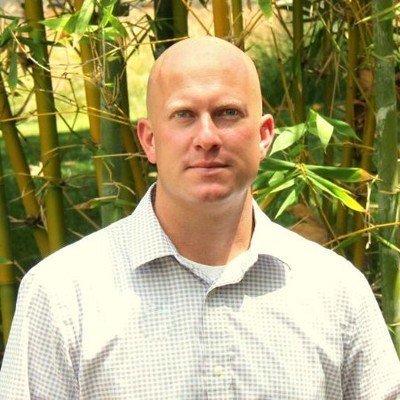
Mike Jones
Novartis
“Use AI to make your life easier, but also make sure you are sense checking and cross-referencing as well.”
Mike Jones has been named to the Talent 100, Class of 2026, the annual award recognizing up to 100 leaders in each category of talent acquisition. Honorees are nominated by peers or found by committees that look for excellent work wherever it happens, then chosen for the depth of their craft and their impact on hiring. This is Mike's story.
Mike Jones spent three years studying computer forensics, a field built around solitary work on high security cases, before concluding it would never fulfil his purpose. He now leads a function at Novartis spanning employer brand, recruitment marketing, talent attraction and market intelligence inside an organization of 80,000 people.
The distance between those two versions of his career is narrower than it looks. Mike is a self described extrovert and a people person, and he is also creative. Employer brand turned out to be one of the few disciplines that demanded both at once. What sealed it was the stake involved: where someone spends the majority of their time is among the biggest decisions anyone makes, and behind that decision sits an organization trying to find the specialist skills its ambitions require.
A Detour That Became A Discipline
After university, Mike did what he calls the classic thing when you are not sure what you want. He went traveling, lived in Australia for a year, and used the time to work out who he was. He came back to an opportunity in London with a media agency, and one of his core clients there was an employer brand and recruitment marketing agency called AIA Worldwide. He loved what they did. Until that point, he had not known the field existed.
He applied for a role there and, in his own telling, fell straight in. Consumer marketing and product branding interest plenty of people, but he found them too broad. This was marketing aimed at careers and at helping people, and the specificity held him. Roughly seven years in the agency world followed, consulting with clients across a wide range of industries and sectors. That breadth propelled his career, teaching him how challenges shift from one sector to another rather than confining him to a single organization's view.
Learning From Several Leaders At Once
Agency life is not a world of thousands. The business was about 100 people, which meant that even in entry level roles he worked closely with the senior leadership team. Mike did not have a linear management experience there. He worked across many clients and reported into three or four senior leaders at the same time, which proved to be an unusual advantage.
Early in a career, he notes, you are a sponge, replicating the working styles of the people around you. Having several models in view at once let him be deliberate about it. He describes handpicking the parts he loved most from each of those leaders and blending them into a version of what he could be and what he could achieve himself. He still keeps in touch, including with one leader now retired from the industry who was hugely influential in onboarding him and getting him up to speed.
Leadership Built On Trust
The person who left the deepest mark during his time at BP was never his direct manager. It was a senior leader in the HR function, his boss's boss, who moved on roughly a year into Mike's tenure. What drew him in was the leadership style. In large organizations, seniority tends to bring busyness and, with it, distance. This leader did the opposite: he knew everyone by name, walked the floor, made time to talk, and built his approach around trust rather than micromanagement.
That model still shapes how Mike thinks about running teams. He values psychological safety, the human side of people, and vulnerability in leadership. Being a leader does not mean knowing everything, he argues; leaders rely on their teams for authenticity, for diversity of thought, and for the culture that follows. He keeps in touch with that former leader on a mentorship footing.
At Novartis he found another. The leader he first reported into is, in his view, one of the most intelligent and articulate people he has met, and now acts as his mentor inside the company. With seven or eight years there, she knows everyone and helps him navigate. She is also a connector by instinct, joining teams, functions and dots and thinking about broader impact. Mike shares the temperament: he dislikes teams working in isolation and believes the best work comes from collaboration across functions.
Connecting The Dots
Mike moved to Novartis after a reorganization relocated his BP role to India, and he was fortunate enough to walk straight into a new position. He arrived heading up employer brand alone. Through a further reorganization and transformation, during which he helped shape the operating model and build out what the function should look like, his scope widened considerably. He has been permanently in his current role since the first of April.
The breadth is the point. Covering brand, recruitment marketing, a proactive sourcing team and market intelligence lets him link campaign activity to sourcing activity to what the external market is actually doing, rather than running each in a separate lane.
The Two Sided Coin Of AI
Mike calls AI a two sided coin, with many pros and many cons, and takes the view that the pros currently outweigh the cons. At Novartis it is a company wide focus rather than a buzzword. Global upskilling and certification in AI is being rolled out to every single employee at every level, so people understand how to use it and what impact it can have regardless of where they sit. All 80,000 people have access to a plethora of tools: AI coaches through a partnership with BetterUp that staff use to prepare for difficult conversations or mid year reviews, Copilot, verified translation tools, an internal ChatGPT functionality, and tools that help build presentations.
The effects inside his own function are concrete. HiredScore helps assess applicants on skills and capabilities rather than job titles, reinforcing a transferable skills philosophy that creates far more mobility. Campaign work uses AI for optimization, budget decisions and understanding which content performs best on external channels. The market intelligence platform sharpens the competitive read. The proactive sourcing team uses it for searching and for talent intelligence, with a CRM behind it mapping people to pipelines and communities. He is also watching AI become a baseline expectation in roles far from traditional technology, from biomedical research and clinical positions to corporate marketing and human resources.
The cautions are just as clear. AI still needs human intervention, because the output is only as good as the brief and the context can be read differently than intended. The industry is seeing a surge in applications generated by AI that are not relevant on skills or experience, pushing pressure downstream onto recruiters screening them. He also sees candidates presenting more strongly than their actual depth, with gaps surfacing later once the assistance is gone. Novartis has begun using AI as an assessment capability to hone in on genuine depth of knowledge and the skills a person could add that the organization lacks today. Nothing, in his experience, has matured this fast in the industry, and his advice carries both halves of that: upskill relentlessly to stay ahead, and keep erring toward caution where it counts.
The Talent 100 exists to celebrate the people shaping the future of how the world hires, and few embody that better than Mike. We are honored to welcome Mike Jones to the Talent 100, Class of 2026, and grateful for the experience, perspective, and craft they bring to this community. Congratulations, Mike. Welcome to the Talent 100.
About the Talent 100
The Talent 100 is an annual list spotlighting the leaders who push HR and talent acquisition forward, organized by Noon AI. Honorees are selected through peer nominations and independent selection committees. Selection is entirely merit-based, with no fees or pay-to-play requirements.