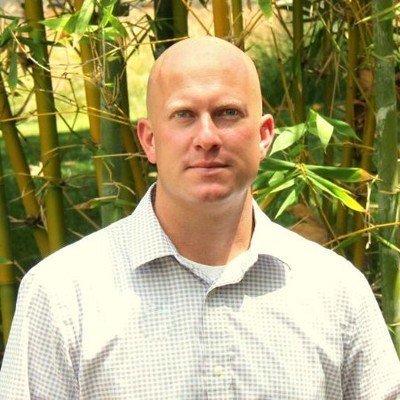
Danny Karageorgis
Sword Health
“In the future, it is going to be on the recruiter to build rapport, negotiate and close, and to make sure the AI is evaluating appropriately.”
Danny Karageorgis has been named to the Talent 100, Class of 2026, the annual award recognizing up to 100 leaders in each category of talent acquisition. Honorees are nominated by peers or found by committees that look for excellent work wherever it happens, then chosen for the depth of their craft and their impact on hiring. This is Danny's story.
Danny Karageorgis earned an accounting degree, took an accounting job, and could not have hated it more. Within a year of switching to technology recruiting at Robert Half, he ranked in the firm's top 50. That pivot, made on the suggestion of a cousin already working the accounting and finance desk, turned out to be less a detour than a discovery: the work rewarded exactly what he was already good at, namely talking to people and reading them accurately. Today he is Global Head of Talent at Sword Health, and he has spent the years in between at some of the most demanding hiring environments in tech, including DraftKings and Circle.
"You don't go to college for recruiting, ever," he says. "And if there were a class, not many people would apply. It's a very hard job, but it can be very rewarding." The distinction matters to him, because the difficulty is the point. Recruiting is not something people are trained into; it is something they either have the temperament for or do not. Karageorgis wanted to move to Boston from the suburbs, had a few good conversations with the team there, and joined as an agency-side technology recruiter. He has kept it going ever since.
The Operators Who Shaped His Playbook
Ask Karageorgis who built him and he does not reach for abstractions. He names moments, habits, and specific pieces of craft he lifted from people he watched up close. His first manager at Robert Half was primarily an account executive, but every so often he would get on the phone with a candidate, and Karageorgis describes him flatly as the best agency recruiter he has ever seen. What he learned there was how to negotiate aggressively in the agency style. He has softened the edges over the years while keeping the core intact.
At DraftKings, the head of recruiting became his second reference point, and by his account the best internal recruiter he has encountered: able to close anyone, able to build rapport with anyone, and always three steps ahead. The chief people officer at DraftKings offered a different lesson entirely, one about generosity rather than leverage. Unassuming in a room until he started talking, he lived by a single rule, that the person you are speaking with should leave the conversation better than they came into it. He did it every time, Karageorgis says, and people walked away grateful he had been there. Karageorgis later recruited him to Circle as chief people officer, which is its own kind of testimonial.
The most recent influence is his current CEO at Sword Health, who is not a recruiter by background but is, in Karageorgis's word, compelling. Watching him work, Karageorgis borrows what fits and leaves what does not. That is the through line across all four: he studies people who are excellent at persuasion, then adapts rather than imitates.
The Skeptic Who Changed His Mind
For most of the past decade, Karageorgis had a standing verdict on artificial intelligence in recruiting. It stinks, he would say. He had tested things. They did not work. His theory was that the money and engineering attention were simply pointed elsewhere, at use cases with far larger revenue upside than hiring.
The last year or two rewrote that assessment completely. He now calls what is available tremendous, and he means it operationally rather than rhetorically. Sourcing and scheduling have shifted. He runs AI note takers. He has tooling that builds scorecards automatically. His team is in the middle of implementing Greenhouse, including its AI recruiter, which changes the arithmetic of the funnel in a way he finds genuinely exciting: instead of picking the top three to five candidates to phone screen, the screens can happen instantaneously and at volume.
He is not worried about what that means for him, and he suspects some recruiters should be less worried than they are. Resume review, sourcing and first-round phone screens are, in his view, on their way out. He is happy to see them go. That work is his least favorite part of the job, and it has always been the part that consumed the hours that should have gone somewhere more valuable.
What Is Left When the Grunt Work Goes
The version of the role Karageorgis sees coming is narrower and considerably harder. Recruiters will build rapport through the process. They will negotiate. They will close. They will own the onboarding experience so that a hire arrives well. And they will audit the machine, making sure the AI is evaluating candidates appropriately rather than confidently producing the wrong answer.
That reshapes the org chart too. He does not expect a future with a million junior recruiters and large sourcing teams grinding through outreach all day. He expects smaller groups of people who are genuinely good at relationships and deals. As he puts it, the job becomes more about managing the AI than managing the candidate and the stakeholder. For anyone whose value has rested on volume activity, that is a real reckoning. For anyone whose value rests on judgment and persuasion, it is a promotion.
Advice for Talent Leaders
Karageorgis's counsel to his peers is unglamorous and specific: stop quitting at the thirty minute mark. The pattern he sees repeatedly is a leader who opens a new tool, hits some wonky behavior in the first half hour, decides the front-end configuration is too much work, and goes back to doing it manually. That instinct feels efficient and is not.
His prescription is to start building internal buy-in now and to accept that proper setup may take an hour, two hours, sometimes three or four. Then, in his phrase, let AI cook. So many of his peers, he says, are too afraid to spend that upfront time and never give the technology a real opportunity to succeed. He believes the window is closing on that hesitation. By the end of 2027, and realistically 2028, he expects the old ways of recruiting to be gone. The recruiters who invested the hours will be the ones still setting the terms.
The Talent 100 exists to celebrate the people shaping the future of how the world hires, and few embody that better than Danny. We are honored to welcome Danny Karageorgis to the Talent 100, Class of 2026, and grateful for the experience, perspective, and craft they bring to this community. Congratulations, Danny. Welcome to the Talent 100.
About the Talent 100
The Talent 100 is an annual list spotlighting the leaders who push HR and talent acquisition forward, organized by Noon AI. Honorees are selected through peer nominations and independent selection committees. Selection is entirely merit-based, with no fees or pay-to-play requirements.