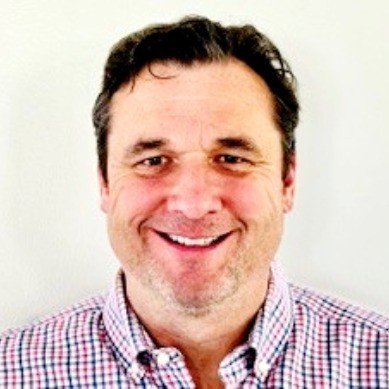
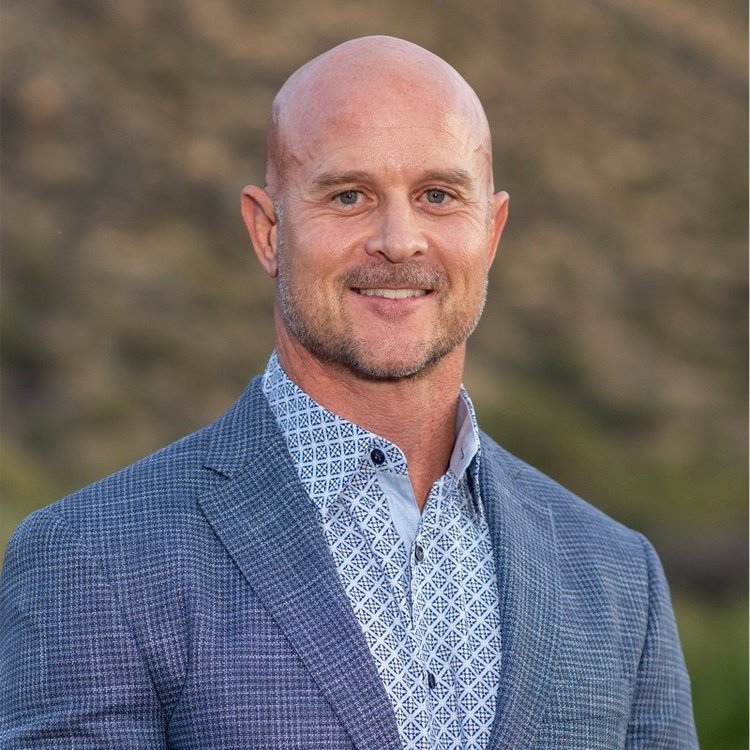
Mike Duplessis
Support Services Group
“Recruitment is a sales job. It's not a company offering a position to a person. It's presenting an opportunity to an individual and having them choose the opportunity.”
Mike Duplessis has been named to the Talent 100, Class of 2026, the annual award recognizing up to 100 leaders in each category of talent acquisition. Honorees are nominated by peers or found by committees that look for excellent work wherever it happens, then chosen for the depth of their craft and their impact on hiring. This is Mike's story.
In the mid-1990s, Mike Duplessis was sent to McKeesport, Pennsylvania to run a 1,000-seat customer service call center for Dish Network. The site had exactly one HR representative. Which meant that hiring, in practice, belonged to operations, and Duplessis found himself learning the mechanics of recruiting from the inside of a business that could not function without it. Three decades later, he leads talent acquisition globally for Support Services Group, and he has never gone back.
From Operations Problem-Solver to TA Leader
The Dish Network and EchoStar years gave Duplessis his first exposure to the trade. The real turn came later. After leaving Dish, he joined TeleTech, staying in the customer service and CX call center world, and spent roughly eight or nine years in operations and shared services. During that stretch the company went about a year without a talent acquisition VP, with heavy client ramps on the horizon and no leader in the seat.
Duplessis had built a reputation as a problem solver and a gap closer. TA was the gap. The company handed him the VP of talent acquisition role, and the assignment turned into a career. "From that day on I have not found my way back into shared services or operations," he says. Talent acquisition stuck, and it has defined every post since.
Today his remit at Support Services Group is global, spanning markets that each behave differently. He works across LinkedIn and Indeed in North America, JobStreet in the Philippines, Computrabajo in Latin America, and Caribbean jobs boards in Jamaica. The lesson he draws from operating at that spread is blunt: all job boards do not function the same, and treating them as interchangeable is how sourcing strategies quietly fail.
AI Versus AI, and the Person Who Says Yes
Duplessis sees the current moment clearly, and without panic. On the employer side, there is an expanding arsenal of AI tools: resume qualification and profile matching inside the ATS, realistic job previews that let candidates demonstrate skill sets, assessment platforms that are easier to build than ever. On the job seeker side, there is an equally capable arsenal built to navigate and maneuver through those same systems.
The result, he says, is AI versus AI, a chess game of matching. But he is emphatic about where the game ends. "At some point it always takes a person to say yes," he says, and he means on both sides of the table: someone saying yes to bringing a candidate into the organization, and a candidate saying yes to the opportunity. The tools move the pieces. People still decide.
He is also alert to what AI obscures. Hire a front-end developer and AI can supply all the right answers. Hire someone to lead a sales organization and AI can build a whiz-bang presentation that impresses out of the gate. His answer is practical demonstration. See what the person can actually do, because the alternative is a hiring cycle that repeats itself over and over.
Advice for 2026: Pools, Boards, and the Unvarnished Look
Duplessis's counsel to other talent leaders starts with the volume problem. AI-generated resumes and mass submissions mean a single LinkedIn post can draw hundreds of applicants inside 24 hours. That is demoralizing for job seekers, who then apply blindly to everything and see what shakes out, and unmanageable for employers who do not have hundreds of staff to comb through the onslaught. His first prescription is to develop talent pools so you know exactly where to go for the right people. His second is to know which specific job boards actually deliver in each market.
His third idea is the one he calls selection by community. Duplessis would open the TA process up broadly, letting colleagues review interview recordings, assessments and CVs and weigh in on the choice. When everybody feels they had a hand in the selection, he argues, it makes a world of difference the day that candidate walks in the door, because everyone already said yes.
He pairs that with radical candor about the role itself. Give candidates a clear, unvarnished picture up front, everything from company culture to whether the shop is hybrid or expects people in the office, so individuals can deselect themselves out of a job that is not for them. "It's just a waste of time to bring somebody in to three months later, four months later, have to replace them," he says. The goal is a genuine match between the functions of the role and the capability to perform it, measured against the two things today's work environment values above all: speed to proficiency and retention. Those, he says, are what you architect a recruitment process around.
The Talent 100 exists to celebrate the people shaping the future of how the world hires, and few embody that better than Mike. We are honored to welcome Mike Duplessis to the Talent 100, Class of 2026, and grateful for the experience, perspective, and craft they bring to this community. Congratulations, Mike. Welcome to the Talent 100.
About the Talent 100
The Talent 100 is an annual list spotlighting the leaders who push HR and talent acquisition forward, organized by Noon AI. Honorees are selected through peer nominations and independent selection committees. Selection is entirely merit-based, with no fees or pay-to-play requirements.