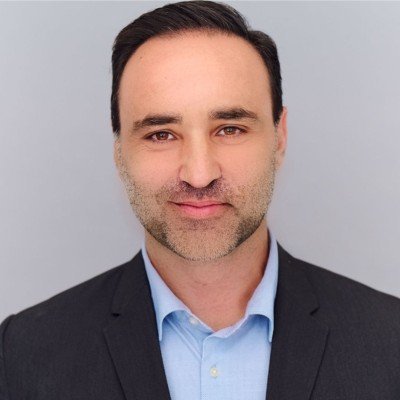
Meghan Rhatigan
Marriott International
“It's almost like you have to adopt AI at this point. If you're not, you're already behind.”
Meghan Rhatigan has been named to the Talent 100, Class of 2026, the annual award recognizing up to 100 leaders in each category of talent acquisition. Honorees are nominated by peers or found by committees that look for excellent work wherever it happens, then chosen for the depth of their craft and their impact on hiring. This is Meghan's story.
Zero to 40,000 hires in a single year, with a team that did not exist twelve months earlier. That is the line on Meghan Rhatigan's record at Marriott International, where recruiting had long been outsourced before she helped stand up an internal talent acquisition function from scratch. It is the kind of number that only makes sense when someone has spent two decades learning how the machinery of hiring actually works, from the benefits desk to the applicant tracking system to the technology recruiters touch every day.
Rhatigan has spent roughly 20 years in HR and the last 15 of them in talent acquisition. Her verdict on the trade is unqualified: she says she has enjoyed every minute of it.
The Technical Side First
She did not begin in recruiting. Her first home was benefits administration, an unglamorous corner of the function that rewards precision and process. She moved quickly into a change management role, where she was handed responsibility for introducing her company's first applicant tracking system.
That assignment turned out to be the door into the profession she has worked in ever since. She entered recruiting through technology rather than through the phone, learning how recruiting systems get implemented and, more importantly, what makes them work or fail once real people touch them. She was trained early to read the process from two directions at once: what matters from a user experience standpoint for recruiters, and what matters for candidates on the other side of the screen. That dual view has never left her, and it explains a great deal about how she evaluates tools today.
Building It From Scratch
The defining chapter of Rhatigan's career opens about four years ago, when a new leader arrived at Marriott. She was his first hire, and she offers her own amendment to that fact: "I like to say his best hire."
Together they took on a structural rebuild. Marriott had been outsourcing all of its recruiting. They created an internal talent acquisition team and built it from nothing, and inside a single year the operation went from hiring no one at all to onboarding tens of thousands of people with a brand new group of recruiters. Growing at that velocity is not a sourcing problem. It is an operating problem, and Rhatigan credits her new leader with teaching her the discipline that made it survivable: metrics, which ones actually matter, and the role of data in running and driving a talent acquisition team. Those habits, along with a broader set of skills she says she still carries with her, continue to shape how she leads.
Adopt, or Fall Behind
AI has dominated recruiting conversation for the better part of three to five years, but Rhatigan sees something genuinely different in the current moment. Recruiting leaders now truly understand the stakes: not only their ability to hire the best talent quickly, but their ability to scale their teams with the most efficient process and the most efficient setup possible. The early adopters have results, and they have gone out to tell their own stories and share their data.
That, she argues, is what has drained the anxiety out of the subject. It is "less of a thing that people are scared of," she says, because they are seeing the impact. And it has arrived precisely as businesses are being asked to do more with less, a pressure that is certainly finding its way into the recruiting space. Her read is blunt. If a talent acquisition leader does not have some form of automation or AI adoption either already in place or coming up in the pipeline, they are probably not doing what the job now requires.
She is careful, though, not to turn urgency into a shopping spree. Her counsel to other talent leaders is to stop being scared of it and then get specific: understand your own business strategy, understand your own business culture, and find the right starting point from there. At Marriott, the team asked a single diagnostic question. What was consuming the most time in the recruiting process? The answer was interview scheduling, and that is where the AI work began. Every organization will land somewhere different. The method is what travels. "You've got to find out what your biggest pain point is," she says, and use AI to tackle that first.
Generous With Competitors
Among the peers Rhatigan believes deserve recognition, the first is a leader at ADT who works in a genuinely hard to hire industry, filling security specialist and call center roles. She has taken what was a very old school way of hiring and brought new thought leadership to it. She tracks technology trends closely. And she gives back to the profession by speaking at conferences, which is not a requirement of the job so much as a choice about it.
Her second choice says as much about her own instincts. She names an employer brand and executive recruiting leader at Hilton, a direct competitor. What Rhatigan admires is that this leader does not really see the two of them as competitors. She cares about the hospitality industry and about bringing talent into hospitality, a priority the two women share as talent acquisition leaders at two of the larger hospitality companies. Her willingness to be open and to share, Rhatigan says, "has been really cool." She counts her as a thought leader and a partner.
The Talent 100 exists to celebrate the people shaping the future of how the world hires, and few embody that better than Meghan. We are honored to welcome Meghan Rhatigan to the Talent 100, Class of 2026, and grateful for the experience, perspective, and craft they bring to this community. Congratulations, Meghan. Welcome to the Talent 100.
About the Talent 100
The Talent 100 is an annual list spotlighting the leaders who push HR and talent acquisition forward, organized by Noon AI. Honorees are selected through peer nominations and independent selection committees. Selection is entirely merit-based, with no fees or pay-to-play requirements.