Matt Battista
Lennar
“Machines can help identify candidates and schedule interviews. But relationship building and influencing people, that's still human.”
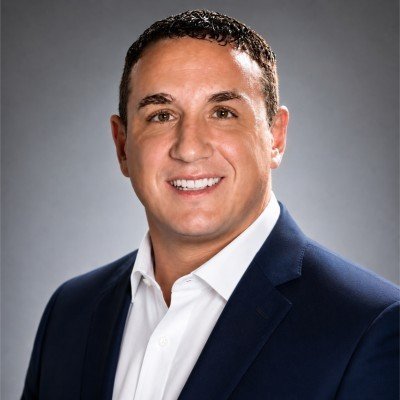
Matt Battista has been named to the Talent 100, Class of 2026, the annual award recognizing up to 100 leaders in each category of talent acquisition. Honorees are nominated by peers or found by committees that look for excellent work wherever it happens, then chosen for the depth of their craft and their impact on hiring. This is Matt's story.
For many talent leaders, recruiting is a career they discover unexpectedly. For Matt Battista, Vice President of Talent Acquisition at Lennar, that journey started far away from talent acquisition, in engineering.
Today, as a senior talent acquisition leader, he is known for building scalable recruiting organizations, embracing innovation, and helping businesses attract top talent. The route that carried him there, however, was anything but traditional, and every unexpected turn along the way left its mark on the leader he became.
An Unconventional Path into Talent Acquisition
After graduating from college, Matt began his career as an engineer, working alongside his father within the same organization. “If you've ever worked for your mom or dad, you probably know where this story is going,” he jokes. Looking to carve out his own path, he decided to leave the organization and pursue opportunities elsewhere, and while he waited for a non-compete agreement to expire, he took a position in retail.
What initially seemed like a temporary stop quickly evolved into a successful career. Matt excelled in operations and field leadership roles, eventually earning opportunities at the corporate level where he helped identify and scale best practices across the organization. During that time, he developed a close working relationship with the company's Chief Learning Officer, who introduced him to the world of HR. Before long, he had transitioned from operations into Learning & Development, helping build leadership and employee development programs.
A year later, that same executive accepted a Chief Human Resources Officer role at another major organization. When his non-compete expired, he reached out with an opportunity that would change the trajectory of Matt's career. "He invited me to join his organization to lead corporate recruiting," Matt recalls. "I knew nothing about talent acquisition, but apparently I fooled him really well."
What his mentor saw was someone with the core traits necessary to succeed in recruiting: relationship-building, communication, emotional intelligence, resilience, and grit. The decision proved to be the right one. Matt quickly immersed himself in the recruiting world, progressing through increasingly complex talent acquisition leadership roles spanning corporate recruiting, field recruiting, executive hiring, and supply chain talent acquisition. That growth, he says, was driven largely by relationships, continuous learning, and the willingness to embrace new challenges.
The Future of Recruiting in an AI-Powered World
Matt has become a strong advocate for AI adoption within talent acquisition and has been leveraging AI technologies within recruiting operations for several years. Even so, he believes the industry is still only beginning to understand what the technology will ultimately mean for the profession. “I don’t think we’ve seen all the impact that AI is going to make in talent acquisition.”
While AI is rapidly transforming sourcing, screening, scheduling, and administrative processes, he believes the most significant shift will be the evolution of the recruiter role itself. He predicts recruiters will increasingly transition from transactional hiring managers to strategic talent advisors. As AI automates repetitive tasks, recruiters will gain more time to focus on what they do best: building relationships, influencing stakeholders, understanding business needs, and creating exceptional candidate experiences.
“Machines can help identify candidates and schedule interviews,” he says. “But relationship building and influencing people, that’s still human.”
Advice for Talent Leaders Entering 2026
As organizations continue navigating rapid technological change, Matt's advice to talent leaders is refreshingly straightforward: be curious, stay informed, and embrace AI rather than fear it. “Don’t fear AI taking your job,” he says. “Fear people who know how to use AI taking your job.”
For Matt, the future belongs to professionals who learn how to leverage technology as a force multiplier rather than viewing it as a threat. The leaders who thrive will be the ones who combine technological fluency with the uniquely human skills that recruiting has always required: empathy, communication, trust, and relationship-building.
Building the Future of Talent
Matt Battista’s career serves as a reminder that there is no single path into talent acquisition leadership. From engineering and retail operations to learning and development and executive recruiting, each chapter of his journey has contributed to the leader he is today.
What has remained constant throughout every transition is his commitment to people, his willingness to learn, and his belief that recruiting is ultimately about helping organizations and individuals succeed together. As talent acquisition continues to evolve, leaders like Matt are helping shape what comes next, combining human connection with technological innovation to build stronger organizations and better careers.
The Talent 100 exists to celebrate the people shaping the future of how the world hires, and few embody that better than Matt. We are honored to welcome Matt Battista to the Talent 100, Class of 2026, and grateful for the experience, perspective, and craft they bring to this community. Congratulations, Matt. Welcome to the Talent 100.
About the Talent 100
The Talent 100 is an annual list spotlighting the leaders who push HR and talent acquisition forward, organized by Noon AI. Honorees are selected through peer nominations and independent selection committees. Selection is entirely merit-based, with no fees or pay-to-play requirements.