Rachel Bourne
Jacobs
“People can take your title, people can take your job, but they cannot take your skills.”
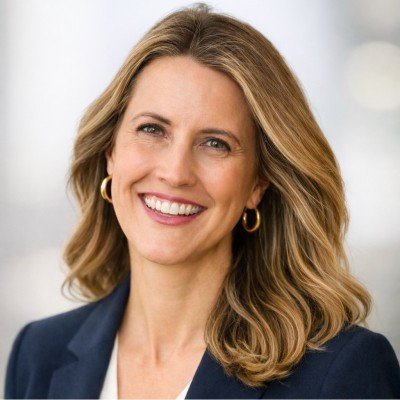
Rachel Bourne has been named to the Talent 100, Class of 2026, the annual award recognizing up to 100 leaders in each category of talent acquisition. Honorees are nominated by peers or found by committees that look for excellent work wherever it happens, then chosen for the depth of their craft and their impact on hiring. This is Rachel's story.
Rachel Bourne trained as an architect. She is still unlicensed, and she says so without apology, because the drafting table turned out to be the least interesting thing she would ever design. What she builds now at Jacobs is something harder to draw: the human side of AI transformation, the pathways and skills and cultural guardrails that determine whether technology lifts a workforce or unsettles it. She came to that work through recruiting, and she remains one of its most articulate defenders.
"I love recruiting," she says. "I think it is an underappreciated profession." Her case for it is not sentimental. Recruiting leaders, in her reading, have been the ones actually standing at the front of enterprise transformation and AI adoption, doing the unglamorous implementation work while other functions debated it. "They are smart and agile operators."
A Cornfield, A Company, And A Case Of Trust
Her entry into talent acquisition began at Cummins, a company she describes as an amazing place to work and, crucially, one that let her be entrepreneurial. She was doing diversity and inclusion work, including at the leadership level, when a real need surfaced in diversity recruiting. She had already earned something no job description can confer: trust, inside the company and inside the town.
That town was a small city in Indiana, headquartered, as she puts it, basically in the middle of a cornfield. It also happens to be internationally famous for its architecture, which is how an architect found herself deeply woven into the local community. Persuading people to relocate there was hard. Persuading candidates from underrepresented groups was harder still. "I loved my company. I loved my community. I had the trust of both to do that." The logic followed naturally: who better to put in that space?
The role was pitched to her as light lifting. Get the tech and the sourcing support, make a few decisions, do not worry about the rest. "And that was so not true," she says. Peeling back the layers of the onion revealed a discipline with real depth, and she stayed. Years later she is unambiguous about what that first recruiting job did for her trajectory: had she not taken it, there is no way she would be working in AI today in the way that she is. She suspects she is not alone, and that a great many people now leading AI and transformation work started exactly where she did. Talent acquisition, she argues, has been a genuine launching pad for careers.
Where AI Actually Helps
Bourne's view of AI in hiring is neither breathless nor defensive. Recruiting, she believes, is a space where AI can genuinely support human decision making, and where human and AI collaboration can work very effectively. Her expertise has been earned in the specifics rather than the slogans: what good, responsible AI actually looks like, and how you help the humans through the change.
The second half of that question is the one she thinks most organizations underweight. Tools arrive faster than trust does. Her broader read on the market is that recruiters are moving into the true talent advisory space, and that recruiting leaders have been carrying the implementation load for the enterprise, not merely receiving it.
She is also willing to say the optimistic thing out loud. "I think that the future in talent is really bright," she says, acknowledging that plenty of people are nervous. The more time she spends inside AI transformation, the further down the road she feels she can see, and what she sees is a paradox: as AI automates more of the work, human connection becomes more valuable, not less. She expects a strategic shift toward human-centered culture. Talent acquisition, in her framing, is a huge steward of that culture. It is the front door, and many of the people who staff it already hold adjacent cultural remits. The open question she keeps returning to is how organizations build and protect that.
The Flight Attendant Standard
Asked what she would tell other talent leaders, Bourne reaches for an image drawn from the cabin, not the boardroom. Talent leaders, she says, are like the flight attendant: they have to stay calm, and they have to help others through the journey. That obligation produces two disciplines.
The first is foresight. Look down the road, anticipate what is coming as far as is possible, and then build the skills and pathways that get people from here to there. Her anchor through every stressful stretch of her own career has been the same conviction: titles and jobs can be taken, skills cannot. She urges leaders to understand the capabilities their function will need in the future regardless of what anyone's current role happens to be.
The second is self-preservation, and she frames it with the same metaphor. You have to put your oxygen mask on first. She draws a direct parallel to the intense period of organizational change that followed the murder of George Floyd, when leaders were asked to guide others through upheaval while absorbing it themselves. Show up depleted and stressed, she warns, and it is not good for anyone. So she practices energy management deliberately: she rests when she needs to, she permits herself to hyper focus when something grips her, and she plans the recovery. The weekend she disappeared into learning to build apps was followed by a weekend of rest. Both were choices.
Paying It Forward
A leader shaped by sponsors tends to become one, and Bourne's instinct for spotlighting others is immediate. She points to a peer at Jacobs and close partner whose work she credits with making her better, as a model of the talent acquisition leader who got out in front of innovation and is now driving it for the broader HR function and the wider enterprise. She points to a colleague at Cummins, head of talent acquisition process excellence and innovation, whom Bourne helped recruit into the field from a traditional corporate quality and process background. That colleague took that base and reimagined talent acquisition as the strongest link in the human supply chain and an innovation engine for a Fortune 150 company, all with what Bourne calls a really good human centered lens.
And she points to former close collaborators at Cummins who have run organizations of roughly 300 recruiters filling 16,000 requisitions a year, recently earned master's degrees, and are stepping into new roles. Bourne's admiration is rooted in something simple and telling: they have never stopped learning. It is the same standard Bourne holds herself to, and the same reason she believes the profession's next chapter belongs to the people already doing the hardest parts of the work.
The Talent 100 exists to celebrate the people shaping the future of how the world hires, and few embody that better than Rachel. We are honored to welcome Rachel Bourne to the Talent 100, Class of 2026, and grateful for the experience, perspective, and craft they bring to this community. Congratulations, Rachel. Welcome to the Talent 100.
About the Talent 100
The Talent 100 is an annual list spotlighting the leaders who push HR and talent acquisition forward, organized by Noon AI. Honorees are selected through peer nominations and independent selection committees. Selection is entirely merit-based, with no fees or pay-to-play requirements.