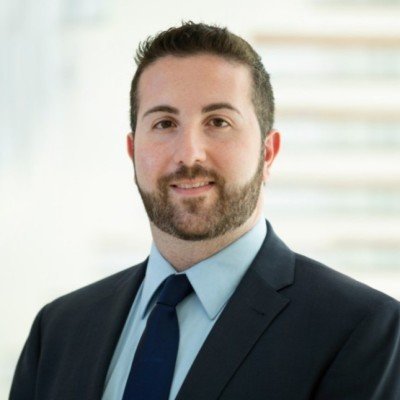
Heidi Gerhard
Mastercard
“The key is not to be a bystander with all of the technology and innovation, but to figure out how you and your team can play a role in shaping the application and the best practices.”
Heidi Gerhard has been named to the Talent 100, Class of 2026, the annual award recognizing up to 100 leaders in each category of talent acquisition. Honorees are nominated by peers or found by committees that look for excellent work wherever it happens, then chosen for the depth of their craft and their impact on hiring. This is Heidi's story.
Heidi Gerhard spent the first couple of years of her career on Wall Street, armed with a degree in finance and international business, and then walked away from the bank to learn recruiting from the ground up. What redirected her was a personal experience early on that made the link between leadership, culture, employee engagement and performance impossible to ignore. She earned a coaching certification in the evenings while still working, recognized that talent acquisition would let her combine a people orientation with an analytical background, and built a career that has since spanned executive search, RPO, leadership development, talent management and, today, global HR service delivery at Mastercard.
The School of Hard Knocks, By Design
Gerhard did not ease into the profession. She chose the hardest classroom available, joining an executive search firm to learn the craft from the best in the headhunting space, and she stayed two years. It was deliberate schooling in how to find, assess and persuade talent before she ever owned a requisition inside a company.
Then she wanted the full life cycle. She joined a boutique financial services consulting organization as recruiter number one and built out its entire recruiting function from scratch. The company grew 400 percent during her time there, a number that tells you what recruiting looks like when it is the engine rather than an afterthought. From there she widened her remit repeatedly: into RPO and consulting, then back in-house into leadership development and ultimately talent management, leading a full talent organization. Each move added a new lens. Search taught her the market. Building from zero taught her scale. Leadership development taught her what happens after the offer is signed.
Transformation, Then Infrastructure, at Mastercard
Gerhard was brought into Mastercard to transform its talent acquisition function. That mandate has since expanded into something broader: she is building out a service delivery capability for all of the company's HR operations, the kind of work that is invisible when it goes well and impossible to ignore when it does not.
The sourcing engine underneath reflects both brand strength and discipline. The team runs its CRM on Phenom and leans heavily on LinkedIn Recruiter, with an additional hiring tool used in certain markets where it can be deployed rather than globally. Layered on top is sustained branding and campaigning through LinkedIn and the company's talent community. As Gerhard notes, Mastercard is a big brand, and a great deal of talent already knows the company and sits inside its network. Her job is to make sure that recognition converts into a consistent, well governed experience.
AI, Governance and the Human Element
Gerhard argues that recruiting may be the HR function most affected by AI, and she sees the reason clearly. Much of the work is repeatable, which makes it a natural candidate for systemization, and thoughtful automation can reduce bias while strengthening compliance and risk mitigation.
Her caution is just as sharp. Technology has to be set up well, with the right governance layers and, critically, the right talent trained to monitor and manage that governance so they can course-correct and educate the AI while keeping it compliant. The failure mode she names is over-rotating on AI for efficiency and losing the culture enablers along the way. Culture has a direct impact on employer brand and on the ability to attract talent, so it has to come through the recruiting process the same way it comes through anywhere else. On the bigger question, she is optimistic rather than anxious. Gerhard is not concerned about humans moving out of the workforce; the question that interests her is where people continue to add value, and her answer centers on human judgment and connection.
Advice for Talent Leaders in 2026
Stay agile. Keep learning. Stay curious. Gerhard delivers those three as a set, because the space is changing quickly enough that any one of them alone leaves gaps.
The real instruction, though, is about participation. Reading and watching are not enough, she says; test and learn instead, and take an active role, because that is where the use cases and the actual applications become clear. Doing so protects the function and the individual at the same time. Play in the technology and your own career stays resilient. Sit on the sidelines and the decisions get made without you. For Gerhard, the invitation to talent leaders is to help shape how AI is applied, what the best practices become and how the function evolves overall, and she is genuinely excited about where that is heading.
The Talent 100 exists to celebrate the people shaping the future of how the world hires, and few embody that better than Heidi. We are honored to welcome Heidi Gerhard to the Talent 100, Class of 2026, and grateful for the experience, perspective, and craft they bring to this community. Congratulations, Heidi. Welcome to the Talent 100.
About the Talent 100
The Talent 100 is an annual list spotlighting the leaders who push HR and talent acquisition forward, organized by Noon AI. Honorees are selected through peer nominations and independent selection committees. Selection is entirely merit-based, with no fees or pay-to-play requirements.