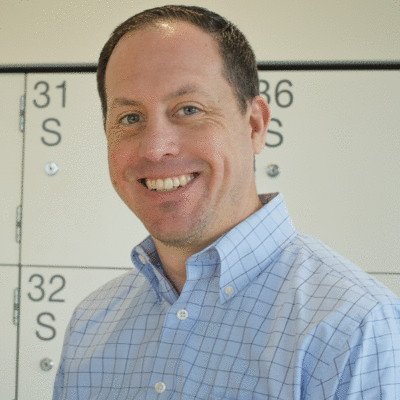
Duncan Finlayson
Calibre One
“Your mindset determines how you view the world.”
Duncan Finlayson has been named to the Talent 100, Class of 2026, the annual award recognizing up to 100 leaders in each category of talent acquisition. Honorees are nominated by peers or found by committees that look for excellent work wherever it happens, then chosen for the depth of their craft and their impact on hiring. This is Duncan's story.
When Duncan Finlayson arrived in the UK in 2012, he looked at executive search and saw an anomaly: an unregulated, multibillion dollar industry where the client tells you what to find, you go and find it, and they pay you for it. He billed 1.1 million in his first year, and 4.8 million at his peak.
Today he is a Partner at Calibre One, running a global AI practice from London. The pitch he makes is not about access. It is about craft, a word he uses deliberately and often with frustration, because he believes the industry has largely mislaid it.
From the Mines to a Global Practice
Duncan grew up in New Zealand and tried, by his own count, almost every job going before search found him. He worked in the mines in Australia. He studied marketing, management and finance at university. Nothing quite fitted until the light bulb moment in the UK, followed by an unapologetically arrogant conclusion: he was going to be good at this.
He was one of seven people in Europe who helped build out True Search, joining when the firm had 80 staff and helping grow it to 1,000 staff and 450 million in revenue, the fifth largest search firm in the world. The practice was early with Spotify, Netflix, Dropbox, Zoom, Deezer and GoPuff. His view of why is unglamorous: deep functional expertise, and not much else.
That expertise has stayed narrow by design. Product, data, technology and transformation: CIO, CTO, CPO, CDO, CISO and now CAIO, plus the VP layer beneath. He works across venture, public, private and Fortune 500 businesses, and across life science, healthcare, bio, sports, media and entertainment. He has not done business development in about five years.
Interviewing for the Human
Duncan interviews candidates differently. He asks about childhood. Given a choice between a polished graduate of an elite school and someone who has battled mental health, intergenerational trauma or a difficult upbringing and is trying to break the pattern, he takes the second candidate every time.
The roster reflects the level he operates at: the CTO and SVP of engineering for a $7 billion payments company that handles the paywall for Facebook, Amazon, Netflix and Google, with a shortlist drawn from the technology leadership of travel, booking and Amazon finance businesses. One search he still rates was the VP of machine learning and AI for Spotify, when the company held what he describes as the ninth richest data set on the planet. The successful candidate moved from Boston to Stockholm and made 15 to 16 million in the IPO. The fee for the search was 100 grand, and the client complained about it.
That gap between value delivered and value perceived is what he wrestles with. Anyone can run the same search for 30K and do it badly. Someone then has to repair the damage with the board, the stakeholders and the customers.
The AI Paradox in 2026
Duncan describes his position on AI as awkward by definition, since he places the leaders building it. He recently placed a forward deployed engineer at a major LLM company on a 600K base one year out of university. He also thinks the sector is running ahead of physics and finance: the energy and infrastructure do not exist to power what is being powered, roughly $4 trillion of revenue and accountability is being circulated between the largest chip and model companies rather than actually paid, and replacing the GPUs in circulation today will cost something like $7 trillion within four years. He compares the moment to rail and the Industrial Revolution, then to the dot-com bubble, and returns to one word: regulation.
His practical objection is noise. Most companies are buying the most powerful model available when they barely need a mid-tier one, and nobody educates them, particularly while token costs are subsidised. Anyone claiming to have run agentic coding in production for longer than nine months is, he says, making it up. You cannot hand 150 engineers refactoring legacy code on a monolith a new tool and expect transformation.
For his own work the effect cuts both ways. AI has helped monumentally, and it has made authenticity of content, mapping and research monumentally harder. His answer is subject matter depth. On a recent pitch he spent 40 minutes talking through the technical challenge with a CEO who was a software engineer, then recited five profiles from memory. Reactive search, he argues, cannot compete with that at the executive level.
Mentors, Discipline, and the Unseen Hours
The mentor Duncan names first is not from the industry at all. John, a family friend in New Zealand, helped him through his darkest times with drugs and alcohol, and the lesson was about being seen generously: someone who never judges you and sees the best in you makes you want to be a better person. Duncan has now been sober for close to two years and calls it the best place he has ever been. He also supports She Is Not Your Rehab, an anti-violence movement founded by two friends from New Zealand that drew public support from Dwayne Johnson.
In search, he credits a French colleague, Thomas, for teaching him the commercial side while never sweating the small stuff, and Caroline, Josephine and Kristina from his True years as friends and mentors, one of whom arrived in England from the Czech Republic without English, started as a receptionist and is now a managing partner at one of the biggest search firms in the world. He also took a year and a half out of the industry to go home when his grandfather turned 100 and his mother became ill.
His advice to talent leaders is blunt. The consultant sits between the investor, the deal partner, the CEO, the chief people officer, the hiring team, the board and the stakeholders, with fifteen people describing fifteen different candidates. "Consistency and discipline are the two hardest things," he says. Nobody sees the 4:30 alarm, the ice bath, the meditation, the breathwork or the three months a year on the road. They only see the placement.
The Talent 100 exists to celebrate the people shaping the future of how the world hires, and few embody that better than Duncan. We are honored to welcome Duncan Finlayson to the Talent 100, Class of 2026, and grateful for the experience, perspective, and craft they bring to this community. Congratulations, Duncan. Welcome to the Talent 100.
About the Talent 100
The Talent 100 is an annual list spotlighting the leaders who push HR and talent acquisition forward, organized by Noon AI. Honorees are selected through peer nominations and independent selection committees. Selection is entirely merit-based, with no fees or pay-to-play requirements.