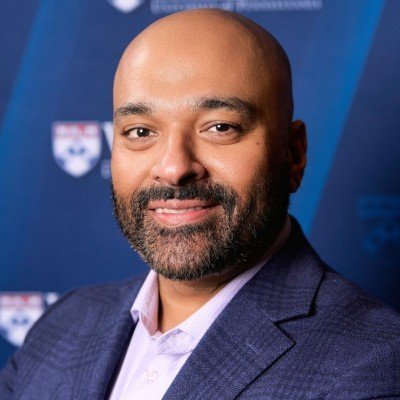
Daniel Müller
Mercuri Urval
“Know your ikigai and go for it.”
Daniel Müller has been named to the Talent 100, Class of 2026, the annual award recognizing up to 100 leaders in each category of talent acquisition. Honorees are nominated by peers or found by committees that look for excellent work wherever it happens, then chosen for the depth of their craft and their impact on hiring. This is Daniel's story.
Daniel Müller entered the search profession the same way the best candidates usually do: someone found him. In early 2012 he was working at a small strategy consulting firm in Switzerland when a headhunter called, and by that summer he had joined Mercuri Urval. This June he marked his fourteenth anniversary with the firm, a tenure that has become unusual in an industry where careers are measured in eighteen month increments. "It feels like three or four years, but it's 14," he says.
A Consulting Plan That Became a Search Career
The original plan had nothing to do with recruitment. Studying business administration in Germany and abroad, Müller was drawn to consulting for the reason most ambitious graduates are: the steep learning curve, the constant rotation of clients, industries and problems. He got exactly that, first in strategy consulting, then in a form he had not anticipated.
Executive search turned out to offer the same variety with higher stakes. Fourteen years in, he describes the ride honestly as interesting and bumpy, full of learnings, different managers, different roles and widening responsibilities. What he does not describe is stagnation. Staying at one firm for well over a decade, he points out, is rarer than staying in one industry, and the industry itself keeps accelerating. He considers himself in the middle of his career, with, as he puts it, way more to come.
Finding Talent Versus Selecting Talent
Müller has a clean framework for the AI question that most of the industry is still arguing about, and it turns on a distinction he draws constantly in his own work: finding the right talent is not the same activity as selecting the right talent.
On the finding side, he is unreserved. AI is a huge accelerator that makes search dramatically faster and more efficient. In his day to day work, which centres on client development and acting as a partner to clients, it has become a genuine booster across outreach, communication, presentation, LinkedIn content, marketing, sales and business development. The administrative weight of the job is exactly where the technology earns its keep.
On the selection side, Müller holds a firm line. When a process narrows to two or three finalists, Mercuri Urval does not use AI to choose. At that point the decision has almost nothing to do with track record or what appears on a resume. It is about culture fit, personality, cognitive abilities and, above all, contextualization: putting the right leader into the right situation. That requires knowing the client at a level that only comes from sitting with board members and C-level peers and grasping the full context around a role. "Human in the loop," as he puts it. He regards that discipline as a genuine differentiator from competitors, not a nostalgic preference.
The Ikigai Standard
Asked what he would tell someone entering the profession today, Müller answers in six words. "Know your ikigai and go for it."
The Japanese concept, he explains, is broader and more demanding than the Western habit of asking about purpose. It has four dimensions and reaches past work into who you are, what your strengths are and what the world actually needs. It is harder to answer than a career plan, which is precisely why he recommends it to the young men and women coming into search. In a business built on placing other people into the right context, it is a fitting piece of advice: start by knowing your own.
The Talent 100 exists to celebrate the people shaping the future of how the world hires, and few embody that better than Daniel. We are honored to welcome Daniel Müller to the Talent 100, Class of 2026, and grateful for the experience, perspective, and craft they bring to this community. Congratulations, Daniel. Welcome to the Talent 100.
About the Talent 100
The Talent 100 is an annual list spotlighting the leaders who push HR and talent acquisition forward, organized by Noon AI. Honorees are selected through peer nominations and independent selection committees. Selection is entirely merit-based, with no fees or pay-to-play requirements.