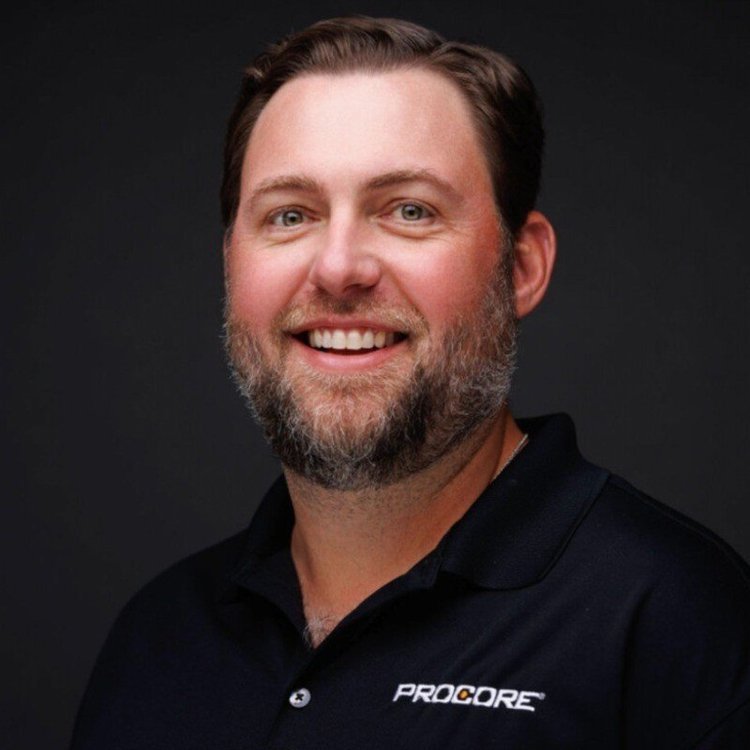
Ashleigh Sabolcik
Arm
“AI is shaping this in a way that I think is actually going to allow TA organizations inside companies to be more human.”
Ashleigh Sabolcik has been named to the Talent 100, Class of 2026, the annual award recognizing up to 100 leaders in each category of talent acquisition. Honorees are nominated by peers or found by committees that look for excellent work wherever it happens, then chosen for the depth of their craft and their impact on hiring. This is Ashleigh's story.
Most talent leaders talk about artificial intelligence as a way to strip humans out of hiring. Ashleigh Sabolcik argues the opposite: that the arrival of automated screening, generated resumes and robo-applications is precisely why recruiting teams will need to sit across a table from people again. As Vice President of Talent Acquisition at Arm, she is building toward that conclusion deliberately, treating every decision about where to automate as a decision about what kind of company a candidate meets first.
It is a philosophy shaped less by technology conferences than by two decades of watching what actually moves a hiring decision. "Your product are your people," she says, "and your people are what make you impactful in your job." In an industry that has spent the last several years lurching between hypergrowth and contraction, that is not a soft sentiment. It is her operating thesis.
A Summer Job That Became a Career
Her entry into the profession was almost accidental. Growing up in Florida, she networked her way into a summer opportunity on the agency side of recruiting, a first taste of the work that stuck. After graduating she took a job in benefits administration, the more administrative end of human resources, and lasted about a year before deciding that recruiting was where she belonged. She returned to the agency world, this time in Charlotte, North Carolina.
"It was really just through networking and luck that I fell into recruiting," she says, an assessment that undersells what came next. Roughly a decade with a single technology company gave her the runway to move from lead recruiter into management and then into leadership, the kind of progression that rarely happens without someone willing to bet on an unproven candidate for the job.
Why AI Should Make Recruiting More Human
Sabolcik has spent the last few years embedding AI into her teams and organizations, and she can chart the shift precisely. What once felt like a distant concept has moved squarely into the operational questions: what technology do we purchase, what do we actually use, and how does it live inside the day to day process.
Her read on where the value sits is unsentimental. Calendaring, sourcing support from large language models, the administrative layer that many organizations never invested in: that is where economies of scale are waiting. But she is clear that a great deal of the AI now in circulation is not indexed toward making recruiters more efficient at all. Candidates can robo-apply. Resumes can be engineered to look like an ideal fit. "There's more need for human oversight," she says, and more need for recruiters to get into the human dynamics so that quality of hire holds every time.
Which is why she expects a return to more in-person interviews and more in-person conversations, not fewer. If automation absorbs the administrative load, the time it frees should be reinvested in exactly the interactions machines cannot fake. Her phrase for it is a reset at the human level.
Intentionality Over Efficiency
Her advice to fellow talent leaders is a warning against speed for its own sake: curate your AI strategy with intentionality. Build the capability deliberately, bring the right skill sets and capacity together, then decide explicitly where automation belongs, where an AI chat interaction is genuinely fine, and where the experience needs to be human centered and human connected.
The test she applies is the candidate's point of view. "If we go too fast on the efficiency gains, you could really alienate key talent and key individuals that you're looking to attract to your company," she says. Done with judgment, the inverse is true: AI implemented thoughtfully can elevate an employer brand rather than erode it. The efficiency is available either way. What differs is whether the company still looks like somewhere a person would want to work.
Partners and Architects, Not a Machine of Efficiencies
Underneath the technology argument is a bigger claim about the function itself. Talent acquisition, in Sabolcik's framing, is not a machine of efficiencies to be optimized and measured only on hiring volume. It is an enablement function without which products do not ship and sales do not happen, and it earns the right to show up as a partner, an architect and counsel to the business.
She is direct about why that matters now. Since 2021 the industry has absorbed enormous disruption, driven in part by how quickly companies tried to scale, and a great many people have had a hard time. Her point to executives is practical rather than plaintive: a team that has been there, been strategic and helped a business grow represents institutional capability that takes a long time to rebuild. "You can't just hire that off the street," she says. "It's cultivated over time and through relationships."
That conviction is part of why she values where she has landed. Arm, she notes, is keen on experience in both directions, employee experience as much as candidate experience, and treats talent acquisition as a strategic part of the whole company strategy rather than a cost line. For a leader whose entire philosophy rests on the belief that people are the product, the alignment is the point.
The Talent 100 exists to celebrate the people shaping the future of how the world hires, and few embody that better than Ashleigh. We are honored to welcome Ashleigh Sabolcik to the Talent 100, Class of 2026, and grateful for the experience, perspective, and craft they bring to this community. Congratulations, Ashleigh. Welcome to the Talent 100.
About the Talent 100
The Talent 100 is an annual list spotlighting the leaders who push HR and talent acquisition forward, organized by Noon AI. Honorees are selected through peer nominations and independent selection committees. Selection is entirely merit-based, with no fees or pay-to-play requirements.