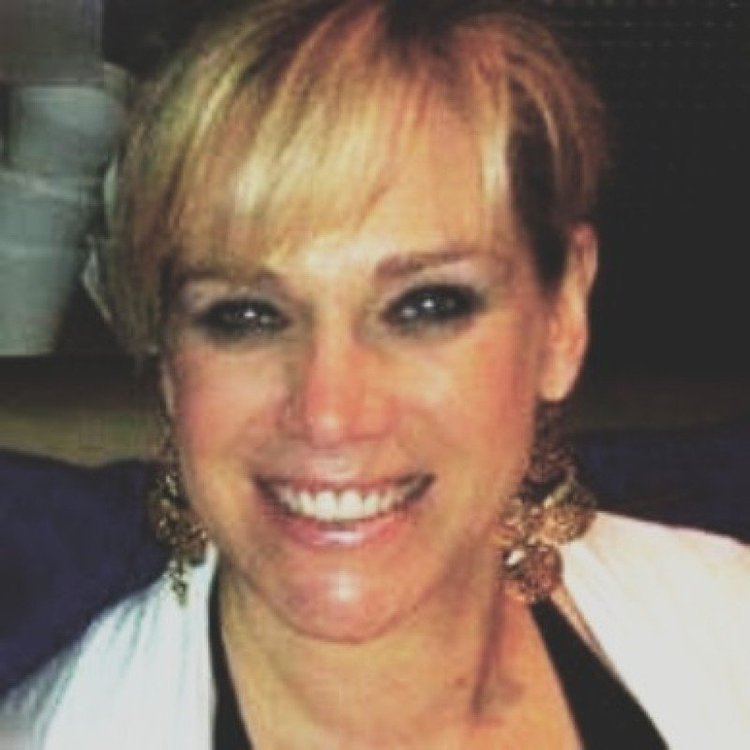
Andrea Marston
Nutanix
“I love talent acquisition. I find it's the most fun part of HR.”
Andrea Marston has been named to the Talent 100, Class of 2026, the annual award recognizing up to 100 leaders in each category of talent acquisition. Honorees are nominated by peers or found by committees that look for excellent work wherever it happens, then chosen for the depth of their craft and their impact on hiring. This is Andrea's story.
One of Andrea Marston's recruiters recently came to her for help framing an offer. She gave the advice, then added an instruction that would have been incomprehensible six months earlier: go get a second opinion from your agent. Ask it how it would frame this answer, how it would frame this offer, and see whether there is an angle you missed. At Nutanix, where Marston leads talent acquisition inside an organization of roughly 8,000 to 9,000 people, that is now the standard operating rhythm. The human judgment comes first. The machine gets a vote.
It is a small moment that says a great deal about how Marston operates. She is not interested in whether her team is impressed by new technology. She is interested in whether they are using it, every day, to think better. "Sometimes it does consider things that are a little bit different to me," she says, which is a rare thing for a leader with her tenure to admit out loud.
Sales First, Then a Suggestion That Stuck
Marston began her career in sales straight out of university, and it did not take long before she was looking for something new. The suggestion came from someone else: look at recruiting. She did. She joined a recruitment agency, then moved into executive search and headhunting, and worked her way across that landscape through the late 1990s and beyond.
The fit was immediate and, in retrospect, obvious. Recruiting gave her the commercial edge of sales and something sales could not: the satisfaction of actually making something fit. "It kind of just spoke to me," she says. She has been in talent acquisition ever since, long enough to have seen the profession reinvent itself several times over.
The real click came later, when she moved from agency to in-house. By then she had also run her own business for a considerable stretch, and that combination proved unusually powerful. She understood revenue, operations, and what it costs a founder to make a hiring mistake, and she understood the other parts of an organization from the inside rather than through a client brief. That blend of commercial fluency and functional depth is what makes her credible with the business today. In-house, she says, was the perfect fit, and talent acquisition remains, in her judgment, the most fun part of HR.
From Recruiters to Talent Advisors
Marston has spent her career in tech partly by choice and partly by temperament. The industry, she notes, is simply more open to trying new things and less frightened of them, and technology has reshaped her function dramatically over the past decade regardless of what anyone thought about it.
But she draws a sharp line around the past twelve months. A year ago, she says, everyone was still playing: experimenting, testing what was possible, trading prompting techniques. The genuine break came only in recent months, with agentic AI. Suddenly every individual could have a sidekick, one that understands the work, crunches the numbers, helps prepare, and reframes a problem from an unfamiliar angle.
For a leader trying to raise the floor across a company of 8,000 to 9,000 people, that is not a productivity story, it is a scale story. "Trying to get everyone to do the same thing is always difficult," she says. Agents change the math, because good practice no longer has to be funneled through managers who become bottlenecks by definition. So Marston had her team build their agents first, then pushed them into daily use. Some now reach for them constantly. Others still need the occasional reminder that they have a tool they did not have six months ago.
The payoff she is chasing is not speed. It is altitude. Freed from the mechanics, her recruiters can be much more strategic and operate as true talent advisors rather than recruiters, and that lift compounds upward. "The more I can elevate my team to working more strategically, the more strategic I can be as a business partner as well," she says.
Be Curious, and Never Treat a Candidate as a Commodity
Asked what she would tell someone entering the profession, Marston does not reach for anything tactical. Be curious. Keep learning. Nobody knows everything, everyone is still discovering this, and the advice is identical whether you are one year in or twenty. Stagnation, in her diagnosis, arrives the moment someone decides they have done it all and settles into churning out the same work. Her prescription is deliberate and annual: ask yourself what you are learning this year that will be genuinely game changing for you.
She rejects the whole framing of arrival. "The destination is not the goal," she says. What matters is what you got out of today, this week, this year, how you grew, and what you did for other people along the way. If it feels like the journey is ending, in her view, you simply have not turned the corner yet.
That philosophy has a hard edge to it when she turns to candidate experience. Marston is blunt about the industry's worst habit: treating candidates as a commodity, because candidates are not the ones paying the bills. She considers that both wrong and strategically foolish. "We are one big circle," she says. Candidates should leave as your biggest ambassadors and your biggest assets, talking about your business and the opportunity they had. The real test, in her telling, is what happens after a rejection. If the person you turned down is still telling people you are a great company and that they want to work there, you have done the job properly. "That's where you want everyone to be."
The Talent 100 exists to celebrate the people shaping the future of how the world hires, and few embody that better than Andrea. We are honored to welcome Andrea Marston to the Talent 100, Class of 2026, and grateful for the experience, perspective, and craft they bring to this community. Congratulations, Andrea. Welcome to the Talent 100.
About the Talent 100
The Talent 100 is an annual list spotlighting the leaders who push HR and talent acquisition forward, organized by Noon AI. Honorees are selected through peer nominations and independent selection committees. Selection is entirely merit-based, with no fees or pay-to-play requirements.