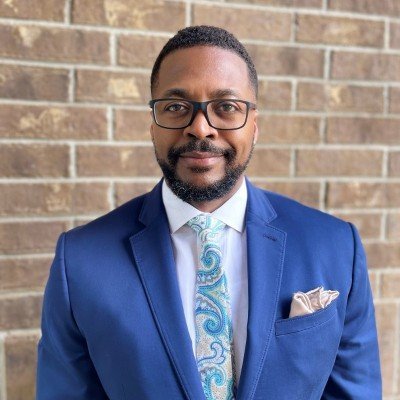
Alina Owsianik
CIBC
“I found myself as an advocate for their talent.”
Alina Owsianik has been named to the Talent 100, Class of 2026, the annual award recognizing up to 100 leaders in each category of talent acquisition. Honorees are nominated by peers or found by committees that look for excellent work wherever it happens, then chosen for the depth of their craft and their impact on hiring. This is Alina's story.
Canada had a shortage of tech talent, and the answer was to bring engineers in from other countries. Some of those candidates arrived with a stronger accent, or without the vocabulary to explain in an interview what they had actually built, and hiring managers too often mistook that for a gap in skill. Alina Owsianik read the room differently. Working at a recruiting agency while she was still in school, she made a habit of translating brilliance for people who could not yet translate it for themselves. "I found myself as an advocate for their talent," she says. More than two decades later, that instinct still organizes her work as a talent acquisition leader at CIBC.
The Lawyer She Almost Became
Owsianik did not set out to build a career in recruiting. Her original ambition was to become a human rights lawyer, someone who advocated for people professionally, on the record, with consequences attached. She notes that the choice barely existed at the time in the form it takes today. For practitioners with twenty or more years of experience, talent acquisition was not yet a discipline of its own; it lived inside the HR generalist role, one responsibility among many. "Some of those people that have 20 plus years, recruiting wasn't yet a thing," she says. The newer generation can dream of it, set the goal, and pick the courses. Her generation, by and large, fell into it.
What kept her there was the discovery that the two ambitions were closer than they looked. Placing an underestimated engineer into a role where their skills finally counted was advocacy by another name. She fell into recruiting, fell in love with it, and built a full career out of it, moving from agency work into the corporate world and eventually into leadership, where the mandate expanded from filling roles to building the people who fill them.
Scratching the Surface on AI
Owsianik is bullish on artificial intelligence and unsentimental about how far the industry has actually come with it. "I don't think we're yet 100% utilizing AI to its fullest capacity," she says. "I think we're scratching the surface across the industry." She frames it the way she frames any technology: the objective is to make the work easier, more efficient, more effective, and used properly, AI should let recruiters truly find the best talent for the roles rather than simply process more of them.
Her caveat is precise rather than reflexive. There still needs to be a human aspect in the loop, and the tools themselves are only ever as good as the people operating them. "AI is as good as we want it to be and as good as its users," she says, which puts the burden squarely back on practitioners to learn.
Asked what she would hand over to automation first, her answer is instructive. In high volume hiring, it is shortlisting and the sheer weight of resume review, the place where recruiters lose the most hours for the least judgment applied. On the sourcing side, it is the market scan, building the top list so that outreach goes to the right talent rather than the merely available. Everything after that, the advocacy and the honest no, is still hers.
Hire for Curiosity, Build for Change
Her advice to other talent leaders is compact and consistent with everything else she believes. Be curious. Be open to learn. Be open to change, and build genuine change management capability into the team, because the change is coming fast and will not wait for anyone's roadmap. Then apply the same lens to hiring: look for people who are open, resilient, curious, and who thrive in an ever changing environment. Those, she argues, are the durable skills in a profession being rewritten in real time.
It is a philosophy she has been practising far longer than the current AI cycle. The candidate who could not articulate their technical skill in a Canadian interview room, the leader who invested time in a young recruiter, the placed employee who still credits her years later: each is a version of the same conviction, that a career in talent acquisition is measured in the people it moves forward.
The Talent 100 exists to celebrate the people shaping the future of how the world hires, and few embody that better than Alina. We are honored to welcome Alina Owsianik to the Talent 100, Class of 2026, and grateful for the experience, perspective, and craft they bring to this community. Congratulations, Alina. Welcome to the Talent 100.
About the Talent 100
The Talent 100 is an annual list spotlighting the leaders who push HR and talent acquisition forward, organized by Noon AI. Honorees are selected through peer nominations and independent selection committees. Selection is entirely merit-based, with no fees or pay-to-play requirements.