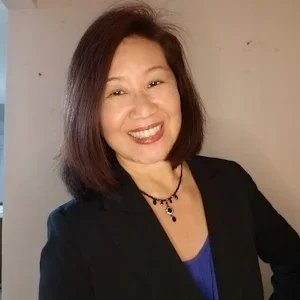
Virginia Tirado
“If you want to survive in this era, you had better be playing with everything every single day.”
Virginia Tirado has been named to the Talent 100, Class of 2026, the annual award recognizing up to 100 leaders in each category of talent acquisition. Honorees are nominated by peers or found by committees that look for excellent work wherever it happens, then chosen for the depth of their craft and their impact on hiring. This is Virginia's story.
Virginia Tirado walked into Amazon in 2015 to interview for a global operations role. She walked out with a different proposition: build executive recruiting for the company in Luxembourg, plus a promise that if the work did not suit her, she would get help finding her way back to operations. More than a decade later, she has never needed to collect.
Today Virginia is Co-Founder and CEO of Reku, a Los Angeles-based, AI-powered tech recruitment and talent solutions company. Reku partners with the next generation of founders to build teams on both sides of the Atlantic. Her path runs through Oracle, Amazon, AWS and Zalando, where she headed talent acquisition and delivered roughly 15,000 hires in three years. One operator's conviction connects all of it: talent is the most important thing a business manages.
Virginia trained as a lawyer in Venezuela, where she grew up. In the United States she earned a master's degree, then returned to law school so she could sit for the bar and practice as a full-fledged attorney. She built a successful legal career. Then, around the time her son was born 23 years ago, an opportunity arose to become an operator.
She spent 16 years at Oracle, much of it in Europe, and worked on 64 acquisitions. A large share of that work was talent mapping: who stayed, who left, and how people's skills fit the combined company. She loved it. Her goal was to become a chief operating officer, and she deliberately planned a stint in HR along the way. Her reasoning was simple. Anyone who runs operations needs to know how to recruit.
Sebastian Gunningham, a longtime mentor who was then an Amazon senior vice president and is now CEO of Remitly, urged her to join a company that was building at a furious pace. The Amazon of 2015 had about 200,000 people worldwide. When Virginia mentioned her interest in HR, the recruiter asked whether she had ever considered executive recruiting. The recruiter then introduced her to Beth Galetti, who had arrived from FedEx three months earlier to lead HR for the operations business and is now SVP of People eXperience and Technology. The problem was concrete: Amazon could hire for regional European roles only in Luxembourg, a very small talent pool.
The impact came quickly. One of her early executive hires helped launch Amazon Logistics in Europe, the delivery program behind Prime orders arriving within hours to a day, and now runs Prime Air. After about two years, though, she wanted to build at scale. Tim Wesson, now SVP of Global Talent Acquisition at IQVIA, brought her to AWS as it opened UK offices near her family. Executive search, he told her, was only a small part of the craft, and he would teach her real recruitment. He offered the same promise of a way back to operations. She helped build professional services and solution architecture, familiar ground from her Oracle years.
Then came Zalando. She joined two weeks before COVID and, alongside Chief People Officer Astrid Arntz, helped build and run talent acquisition through roughly 15,000 hires. "I like process," Virginia says. "I like managing people."
Virginia believes mentors teach in both directions, sometimes by showing who not to become. Tim remains her first call for a reference, advice or a second brain on a project. He also brought Nicole to AWS alongside her, and Nicole is still there. Virginia calls him a humble leader who rarely promotes himself and deserves far more credit. Sebastian comes from the business side rather than HR, and he taught her what it means to hire and develop the best: however busy he is, an email eventually gets a reply. Astrid gave her the chance to build something significant together.
Some of her most valued relationships run the other way. Josh Procter, an AWS talent acquisition leader now in Singapore, still trades career conversations with her years after she left in 2019, with each serving as a sounding board for the other. James, a former Zalando colleague now at Vault, part of DoorDash, checks in unprompted to ask how he can help. Getting into the weeds with people who are building, she says, keeps her humble and keeps her young. She is quick to credit the people doing the hard work today.
Reku launched with a business partner who now leads research operations and recruiting for Cognition. Its stack is completely AI native. Although Reku works externally, Virginia runs on Ashby rather than traditional agency software like Bullhorn, because she believes the best products are built for in-house teams with stronger processes. She has tried MetaView and Juicebox and uses Claude. She also champions Exa, an agentic search engine built for the era of AI that she compares to what Google was for the internet. As her own boss, she needs no IT approval to experiment, and she experiments daily. Even among companies that might compete, she sees room for everyone.
Splitting her time between Los Angeles and San Francisco keeps her near the frontier. During SF Tech Week she joined a JP Morgan session with NVIDIA's chief product security officer and Oracle Health's head of AI. They took on a pressing question: how do you gain durable benefits from AI when everyone has the same advantage, the same polished CV and the same interview prep tools? She is candid that assuming no jobs will be lost is naive. When she asked the NVIDIA leader what he looks for in candidates, he said he wants to know what people are teaching themselves right now.
Her counsel is direct. "If you want to survive in this era, you had better be playing with everything every single day," Virginia says. Pay for tools if necessary, invest in yourself, and talk to the people using them. She practices what she preaches: after meeting a top Muse product designer on a panel, she offered frank feedback on the product and left with practical tips.
Above all, she urges recruiters to think about talent holistically. Those who simply landed in recruitment, she warns, should be asking where they will land next.
The Talent 100 exists to celebrate the people shaping the future of how the world hires, and few embody that better than Virginia. We are honored to welcome Virginia Tirado to the Talent 100, Class of 2026, and grateful for the experience, perspective, and craft they bring to this community. Congratulations, Virginia. Welcome to the Talent 100.