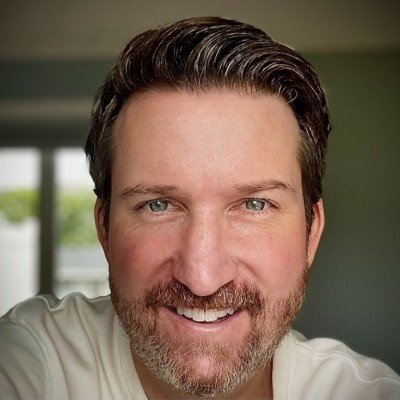
Tal Assayag
Forte
“To see beyond the CV, to see beyond the people that we speak with, I think this is the key.”
Tal Assayag has been named to the Talent 100, Class of 2026, the annual award recognizing up to 100 leaders in each category of talent acquisition. Honorees are nominated by peers or found by committees that look for excellent work wherever it happens, then chosen for the depth of their craft and their impact on hiring. This is Tal's story.
Tal Assayag begins her workday twice. Once in the morning, and again at night in Tel Aviv, after four children are asleep and the house has gone quiet, when she reconnects to a talent function that spans time zones and cultures. Seven years into her tenure at Forte, that rhythm says something about how she works: deliberately, with boundaries, and with an insistence that the human part of the job never gets automated away.
From the Classroom to the Science of Behavior
Her career did not start with a requisition. It started with a classroom. Like all Israelis, Assayag entered military service after school, and she served as a soldier teacher, working with very young children who came from broken homes, kids whose parents were not functioning as parents should. One day a week, she and her fellow soldier teachers went to the university to train formally for the profession.
It was there, in conversation with one of her professors, that a door opened. She learned there was a discipline devoted to understanding why people do what they do, and how they might be moved toward better decisions. She left the army and went to study behavioral science. What she wanted, badly, was to become an organizational psychologist and reshape companies from the inside.
Reality intervened in the most useful way. She was young, and by her own account she had zero understanding of how things actually worked, so she took a job as a recruiter at an agency to learn the machinery. The clarity arrived almost immediately. "I understood very quickly that this is my path," she says. She could read people. She could see how an individual's strengths might be elaborated into something a company genuinely needed. And she could change the trajectory of a life, one conversation at a time.
That conviction has stayed with her, sharpened by a puzzle she has never quite accepted. She watched colleague after colleague treat talent acquisition as a waystation, a step to be traded for a classic HR role. Assayag could not understand it. Few functions carry as much impact or as much meaning. Talent acquisition was not the runway. It was the destination.
Fifty Episodes, and What They No Longer Say
Three years ago Assayag launched a podcast and recorded 50 episodes with leaders across the talent acquisition space. Her verdict on that archive today is unusually candid: most of it is no longer relevant. The pace of change has outrun the conversation, and she is not precious about it.
Her read on why is grounded rather than breathless. The bulk of recruiting work, she points out, is operational and repetitive: submitting scorecards, preparing candidates for interviews, absorbing the business needs of the organization and its stakeholders. Agents and AI, used well, clear that layer away. What they cannot do is the part she considers the actual job, which is shaping the company itself.
That means structuring and prioritizing critical hiring needs, understanding strategic requirements, collaborating cross functionally, and connecting hiring decisions to revenue. "Recruitment has a very strong power on shaping the companies," she argues, and the leaders who use the time AI gives back to think rather than execute will finally position talent acquisition where it belongs in the org. Her phrase for the alternative is blunt: robot mode.
Adopt Everything. Doubt Everything.
Her advice to other talent leaders holds two ideas in tension, which is why it is worth hearing. Adopt AI as aggressively as you can. Then interrogate it just as aggressively.
She is wary of the gravitational pull of the hype cycle. Pushing an AI function into real production is genuinely difficult, and the assumption that everything can be transformed at once invites carelessness. So she recommends a posture of permanent curiosity: try the new tools, then challenge the outputs and the working methods behind them. Doubt, in her vocabulary, is not cynicism. It is the same instinct she has always relied on, applied to technology.
And underneath it, the constant. "At the end of the day, we're human, and in a talent position, work with humans," she says. Not robot mode. Human at the end. For a leader who came to recruiting through a classroom of children who needed someone to see them clearly, it is less a slogan than a through line.
The Talent 100 exists to celebrate the people shaping the future of how the world hires, and few embody that better than Tal. We are honored to welcome Tal Assayag to the Talent 100, Class of 2026, and grateful for the experience, perspective, and craft they bring to this community. Congratulations, Tal. Welcome to the Talent 100.
About the Talent 100
The Talent 100 is an annual list spotlighting the leaders who push HR and talent acquisition forward, organized by Noon AI. Honorees are selected through peer nominations and independent selection committees. Selection is entirely merit-based, with no fees or pay-to-play requirements.