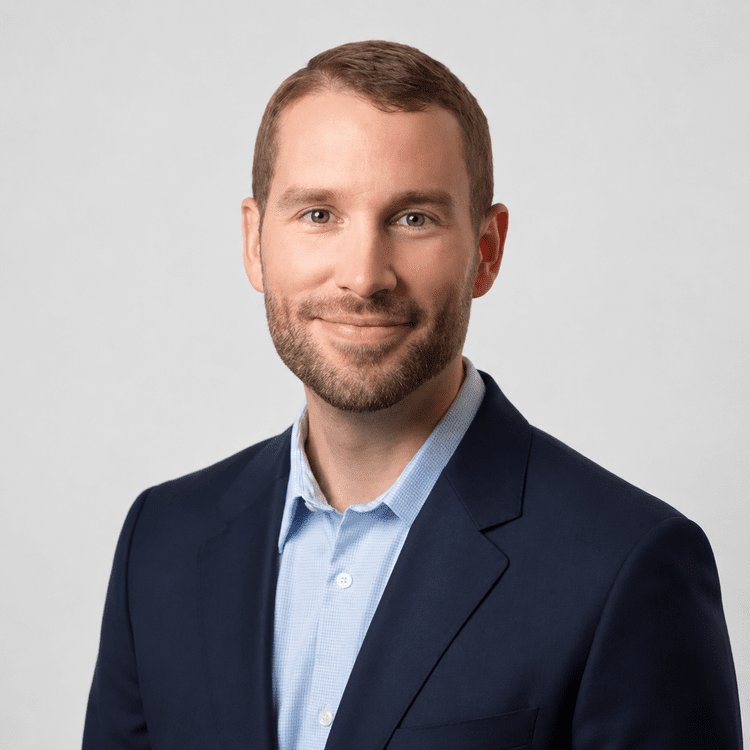
Nathan Craigie
Raffles London
“Recruitment is all about understanding people.”
Nathan Craigie has been named to the Talent 100, Class of 2026, the annual award recognizing up to 100 leaders in each category of talent acquisition. Honorees are nominated by peers or found by committees that look for excellent work wherever it happens, then chosen for the depth of their craft and their impact on hiring. This is Nathan's story.
Nathan Craigie spent the first act of his career in the kitchens of five star hotels around the world, and the second building the workforce of one. At Raffles London, where he arrived as part of the pre-opening team and marks four years next month, he is fully responsible for the recruitment and personal development of roughly 480 staff across the building, a property named best new hotel in the world in its first year and ranked in the top 50 hotels in both years since.
That combination, a former chef who now hires them, is not a novelty. It is the whole method. Nathan knows what the job actually feels like at two in the morning on a hot line, and he knows which London kitchens are opening, closing and changing hands this week. In an industry where hiring decisions are often made on paper, he brings something harder to fake: lived credibility.
From the Kitchen to the Candidate List
Nathan trained and worked as a chef in luxury hotels, an apprenticeship in standards that later became an apprenticeship in judgment. His entry into recruitment was almost accidental. Doing temporary work through an agency, he stopped by its offices one afternoon to collect a cheque and found the team short staffed. They asked if he would sit in and help answer phones and arrange interviews. He said yes immediately. By the end of that same day, they had offered him a role as an assistant in their temporary recruitment team.
Six months later he had learned the mechanics of temp recruitment, and was headhunted into Collins King & Associates, a bespoke luxury recruitment firm serving London's hospitality industry. There he headed up one of the chef's desks for five to six years and completed his CIPD qualifications in his own time, on his own initiative. When Covid arrived and hospitality hiring froze across the capital, the roles simply stopped. Through his network, he landed on his feet on one of the most complex openings in the city: Eataly's flagship London store, with four restaurants, retail space, a cookery school and a wine shop.
He ran full 360 recruitment through the pandemic and the reopening that followed, a period he describes plainly as really tough, really difficult. They opened anyway. By the time he left just over two years later, he was Head of Talent Acquisition.
Building a Hotel Before It Exists
Pre-opening recruitment is its own discipline. There is no employer brand yet, no incumbent team to sell the culture, no track record to point to. There is only a promise and a deadline. Nathan joined Raffles London to staff a building from zero, and the results speak for the standard he set. Best new hotel in the world in year one. Top 50 hotels in both years since.
His remit did not stop at the offer letter. He owns personal development for the entire population of around 480 employees, which means he is judged not only on who walks through the door but on who is still there, and better, a year later. In ultra luxury hospitality, where every guest interaction is delivered by a person, that is the only metric that ultimately matters.
AI, and the Line He Will Not Cross
Nathan is not an AI sceptic. His team already uses it for CV sifting, screening at volume, psychometric testing for incoming staff, and internal development. He expects its role to grow, and he is actively looking at how to utilise it more. But he holds a clear boundary, and it is a commercial one as much as a philosophical one.
"I want to use it, but also want to be very careful of how much we use it, that we don't take away the personal touch," he says. In luxury, emotional intelligence and deep industry knowledge are the product, and he considers both very hard to replicate. The real question, as he frames it, is not whether to adopt AI but how to marry it to the people side. "We still need to understand people," he says. "Their dreams, their experiences, their personalities." AI may get there. He is not convinced it does it fully today, and until it does, he is not willing to trade a candidate's humanity for a faster funnel.
Never Sit Back
Ten years into recruitment, Nathan's advice to other talent leaders is deceptively simple: stay relevant. What the job looks like now bears little resemblance to what it looked like when he started, and the only defence against that pace is relentless curiosity about the industry and the people in it.
In practice, that means building your knowledge base and your portfolio of people the way a chef builds a larder. In London, he notes, restaurants and hotels open and close every other day, and his job is to know all of them: where they are, who the chefs are, who is managing each one. Networking is not a soft skill in his world, it is inventory. "Never sit back and rest," he says, "because there's always going to be something new to learn." New technologies. New ideas. Different ways of doing things. Coming from someone who once picked up a cheque and walked out with a career, it is less a platitude than a description of how he has actually operated for a decade.
The Talent 100 exists to celebrate the people shaping the future of how the world hires, and few embody that better than Nathan. We are honored to welcome Nathan Craigie to the Talent 100, Class of 2026, and grateful for the experience, perspective, and craft they bring to this community. Congratulations, Nathan. Welcome to the Talent 100.
About the Talent 100
The Talent 100 is an annual list spotlighting the leaders who push HR and talent acquisition forward, organized by Noon AI. Honorees are selected through peer nominations and independent selection committees. Selection is entirely merit-based, with no fees or pay-to-play requirements.