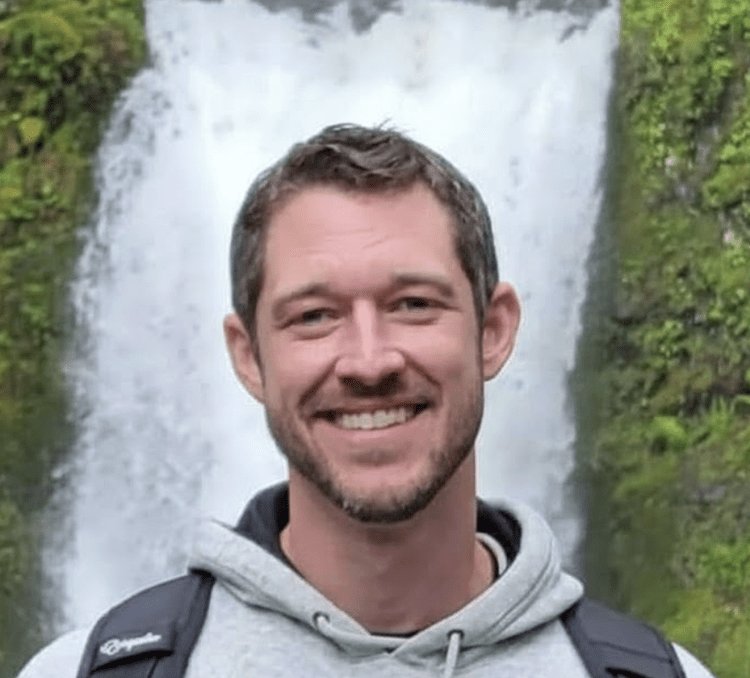
Michelle Yoshihara
Greenhouse Software
“Where you are today is certainly not where you have to be tomorrow, and your curiosity is going to be the thing that propels you forward.”
Michelle Yoshihara has been named to the Talent 100, Class of 2026, the annual award recognizing up to 100 leaders in each category of talent acquisition. Honorees are nominated by peers or found by committees that look for excellent work wherever it happens, then chosen for the depth of their craft and their impact on hiring. This is Michelle's story.
Most people land in recruiting sideways. Michelle Yoshihara chose it on purpose, as an undergraduate business student working in her school's career center, where she discovered that the function she was watching up close even existed. She has never worked outside talent acquisition since. What began as curiosity about connecting people to opportunity hardened into a conviction: that the machinery matching talent to jobs is more broken than most companies are willing to admit, and that talent teams are the ones positioned to fix it.
Recruiting on Purpose
The conviction had a face attached to it. Yoshihara watched her brother, trained as a mechanical engineer, decide to pivot into software engineering and complete a bootcamp to get there. He was then turned away from a handful of job opportunities, not because he could not do the work, but because he had not studied it through a formal education. "The system feels a little bit broken," she remembers thinking, and alongside that thought came another one: she could make a real difference here.
The question she has been working on ever since is deceptively simple. How does an organization connect talent with demonstrable skills to the opportunities it actually needs filled, without leaning entirely on backgrounds, degrees and resumes taken in totality? That question, more than any job title, is the through line of her career. It is why she went into talent acquisition intentionally, and why she has stayed.
Three Lenses on AI
Ask Yoshihara how AI has reshaped recruiting and she does not offer a verdict. She offers a framework, and it has three parts.
The first is volume and authenticity. The everyday recruiter is now absorbing enormous numbers of applicants, many of uncertain quality and some of uncertain reality. Greenhouse's answer, Real Talent, is aimed squarely at that problem: using AI to filter out what is not aligned or not genuine, and, just as importantly, to surface the real candidates already sitting inside the applicant pool.
The second lens is the one she finds most interesting, because it is the one talent teams uniquely control. Assessing candidates for AI fluency, proficiency or expertise, she argues, is structurally the same exercise as hiring for culture add. You are not looking for someone who mirrors the organization as it exists today or the behaviors it already has. You are looking for something aspirational. Your company may not be where it wants to be on AI yet, but by continually adding talent that is genuinely AI forward, you change what the organization is capable of. "That's a really unique thing that talent teams can do," she says, "because they are the people that are bringing in the talent."
The third lens is workflow, and here she is both enthusiastic and precise about the limits. Turning a bare job spec into a job post that actually appeals to candidates, drafting interviews, tightening the mechanics of a process: all of it can be made more efficient. What cannot be outsourced is judgment.
Where the Expertise Still Lives
Yoshihara has a favorite illustration of what recruiters are still for. You ask Gemini or Claude for ten interview questions. Two of them are excellent, but someone earlier in the loop is already asking those. Three are solid, so you keep them. The rest are not good enough, so you either rework them or cut them entirely because you simply do not need them.
That triage is the job. It is the discernment her team is actively honing, and the discipline she encourages other teams to build rather than assume. The tools generate. The recruiter decides. Losing that distinction, in her telling, is how organizations end up with faster processes and worse hiring.
Curiosity as a Career Strategy
Asked for the single piece of advice she would hand to other talent leaders, Yoshihara does not hesitate. Be curious. "Where you are today is certainly not where you have to be tomorrow," she says, "and your curiosity is going to be the thing that propels you forward." Coming from someone who moved from recruiting coordinator to talent leader inside the same company, it reads less like a slogan than a description of method.
She is unreservedly optimistic about what comes next. By her read, the industry is only at the early midpoint of what AI can do for talent. Forward thinking teams have already found impressive efficiencies, but the efficiencies are not the point. What excites her are the new things those efficiencies will unlock, the work talent teams have never had the room to attempt. Greenhouse will keep exploring, she expects, and so will talent professionals everywhere. "I'm genuinely so excited about where we can go," she says. Given where she started, and the brother whose experience set her on this path, it is a fair bet she means people as much as technology.
The Talent 100 exists to celebrate the people shaping the future of how the world hires, and few embody that better than Michelle. We are honored to welcome Michelle Yoshihara to the Talent 100, Class of 2026, and grateful for the experience, perspective, and craft they bring to this community. Congratulations, Michelle. Welcome to the Talent 100.
About the Talent 100
The Talent 100 is an annual list spotlighting the leaders who push HR and talent acquisition forward, organized by Noon AI. Honorees are selected through peer nominations and independent selection committees. Selection is entirely merit-based, with no fees or pay-to-play requirements.