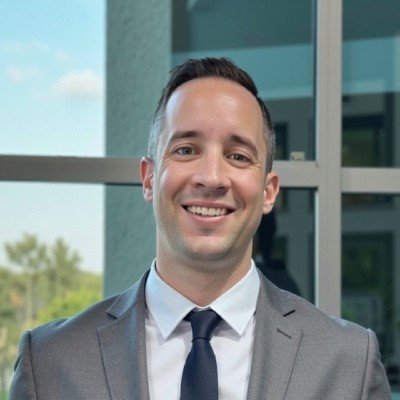
Michelle Weber
Gap Inc.
“Lean into the change, lean into the disruption early, and be a part of how it's starting to reshape our function. Don't sit and wait on the sidelines.”
Michelle Weber has been named to the Talent 100, Class of 2026, the annual award recognizing up to 100 leaders in each category of talent acquisition. Honorees are nominated by peers or found by committees that look for excellent work wherever it happens, then chosen for the depth of their craft and their impact on hiring. This is Michelle's story.
Thirty days into an assignment that was never meant to last, Michelle Weber got the question that redirected her career. She had agreed to cover talent acquisition on an interim basis at H&M, on top of her existing remit as head of talent development, while the company searched the market for a permanent leader. The chief people officer came back with different news: this seems to really be working. Would she consider keeping talent acquisition for good and blending the two functions into a single end-to-end total talent role?
She said yes. More than a decade later, Weber leads talent acquisition at Gap Inc., and the logic behind that original decision still defines how she works: hiring, development, leadership and succession are not separate disciplines competing for headcount. They are one continuous conversation about talent, and the connection points between them are where the value lives.
A Career Built in the Field
Weber's path into talent leadership ran through the operating side of retail rather than through a recruiting desk. She started as a general manager, moved into her first HR functional role, and was later promoted to director in an HR business partner capacity. By the time she joined Old Navy she was head of field HR, running people strategy for a workforce spread across hundreds of locations.
That grounding shows up in how she talks about the function. Weber is unusually candid about what talent acquisition can become if no one intervenes. "TA has this kind of inherent nature of being transactional and very operational and tactical," she says. Her ambition, consistently, has been to pull the work up a level: away from the day-to-day grind of task load management inside a system and toward the judgment, advisory and relationship work that only a person can do.
She has also led through genuine crisis. Inside Gap Inc., Weber and a close colleague built and ran a crisis response team during COVID, standing up a call center and, in her words, revolutionizing how the company delivered HR. It is the kind of assignment that tends to permanently change a leader's tolerance for ambiguity.
AI as a Lift, Not a Threat
Weber is bullish on artificial intelligence in talent acquisition, and for a specific reason: it attacks precisely the part of the job she has spent her career trying to shrink. "AI really has the power to transform our functions," she says, and what excites her is not efficiency for its own sake but what efficiency buys back. Automating the transactional layer frees recruiters to spend time where it matters most, which in her view is candidate care and candidate sell.
That is the strategic case she makes internally. Lifting the workload is what allows a team to stop being an order-taking service and start behaving like talent advisors, nurturing pipelines with genuine attention instead of processing them between system updates. The technology, in other words, is a means of restoring the human parts of recruiting rather than replacing them.
Why Not, Instead of What If
Her advice to other talent leaders is direct. Don't be afraid of it. Experiment with it. Identify the high frequency tasks that can be automated, and use the reclaimed hours to augment your time and your impact. Weber frames the shift as an emotional one as much as a technical one: move out of a place of fear and what if, and into why not, what can it do, and how can it help me be even more effective at what I'm doing today.
The instruction that follows is the one she lives by. Lean into the change and the disruption early, be part of how the function gets reshaped, and do not sit and wait on the sidelines. Coming from someone whose entire career pivoted on saying yes to a thirty-day assignment, the advice carries some weight.
Paying the Spotlight Forward
Weber is quick to recognize other leaders in the field who exemplify excellence in talent acquisition. She points to head of global field talent acquisition at Apple as one of the most agile and committed TA leaders she has worked with: deeply tenured, relentlessly business-centered, and a model for how to keep adapting and stay on the forefront of the function. She also admires the long-tenured head of talent acquisition at Aritzia for something harder than growth alone. "They're just like unwavering in their talent standards," Weber says, praising the quality and consistency of hiring the company has sustained while continuing to scale.
It is a telling set of observations from a leader whose own career was built by people who took chances on her, challenged her thinking, and refused to let her settle. Weber has clearly been paying attention to what that costs, and what it returns.
The Talent 100 exists to celebrate the people shaping the future of how the world hires, and few embody that better than Michelle. We are honored to welcome Michelle Weber to the Talent 100, Class of 2026, and grateful for the experience, perspective, and craft they bring to this community. Congratulations, Michelle. Welcome to the Talent 100.
About the Talent 100
The Talent 100 is an annual list spotlighting the leaders who push HR and talent acquisition forward, organized by Noon AI. Honorees are selected through peer nominations and independent selection committees. Selection is entirely merit-based, with no fees or pay-to-play requirements.