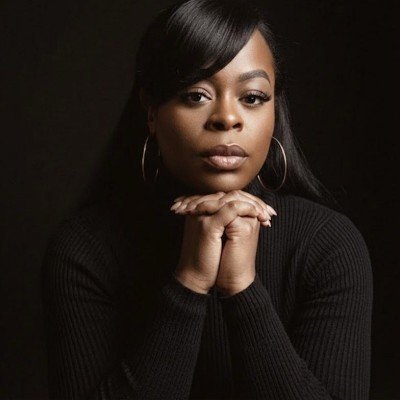
Kristen Sroczynski
Relode
“I'm just trying to find the right person for the right opportunity, and I get to do that all day.”
Kristen Sroczynski has been named to the Talent 100, Class of 2026, the annual award recognizing up to 100 leaders in each category of talent acquisition. Honorees are nominated by peers or found by committees that look for excellent work wherever it happens, then chosen for the depth of their craft and their impact on hiring. This is Kristen's story.
This week, a candidate Kristen Sroczynski placed three years ago reached back out to tell her they were still happy in the role. In an industry that keeps score in submittals and starts, that is the metric she trusts most: not whether the offer closed, but whether the person is still thriving in it years later.
As Director of Recruiting at Relode, Sroczynski works primarily in the healthcare space, a market she has watched transform from the inside since 2021. She is candid that the job is built on a foundation of rejection. She is equally clear that the exceptions are worth everything. "There's a lot of nos in our industry," she says. "But also a lot of impact."
From The Cosmopolitan to the Candidate Pipeline
Sroczynski is a Las Vegas native, and every role she held from university onward was events and people facing. She was working at The Cosmopolitan when the pandemic arrived and the city, along with the entire live events economy, went quiet. That inflection point became her entry into recruiting.
She started at a boutique agency with its own clients and a handful of platforms, and by her own description put the training wheels on. That first year was an education in the taxonomy of the industry: contract versus locum versus perm, light industrial versus healthcare, and the very different rhythms each one demands. Healthcare stuck. She has spent the majority of her career there since, including through the full arc of the COVID era, which she calls, with some understatement, "quite an era" to be recruiting clinicians.
What she brought with her from hospitality turned out to be more durable than any technical playbook. Concierge work, events work, the daily practice of reading a room and getting to know people quickly: all of it maps cleanly onto recruiting. "It's just connecting people," she says. "Yes, you're servicing your clients. Yes, you're working with your candidates. But I'm just trying to find the right person for the right opportunity, and I get to do that all day."
That framing is what powers her through the harder weeks. She points to a placement she made recently for someone who had believed they were retired, realized a year in that they were not ready, and needed a way back. It is a pattern she sees often in healthcare, and one she has learned to treat as an opportunity rather than a complication. The work, at its best, is life changing.
Adopting AI Without Losing the Human Part
Sroczynski's position on artificial intelligence is refreshingly unhysterical. "It's not going anywhere," she says, and she has no interest in pretending otherwise. She is quick to note that AI has quietly lived in the back end of recruiting for years, in resume parsing and applicant tracking systems. What has changed is that it has moved to the front of the house, into the candidate interaction layer, and that is where she believes the real gains and the real risks now sit.
Her own usage is deliberate. She does not touch it every day, but she uses it every week: on communication, on her writing, on job descriptions, on the mechanics of connecting with candidates. Her team is actively trialing several tools, and she expects her usage to climb by the end of the year. She describes herself as balanced on the subject, and she means it as a discipline rather than a hedge.
The line she will not cross is authenticity. "AI is amazing, but I also don't want to lose this," she says, meaning the human exchange at the center of the job. Efficiency is worth pursuing. Integrity is not negotiable. In a market where automation is being sold as a substitute for judgment, that distinction is a competitive advantage, not a limitation.
Stay Hungry, and Bet on Drive
Ask Sroczynski for advice and she immediately splits the question in two, because she does not believe newcomers and talent leaders need to hear the same thing.
For people entering the industry, her counsel is simple and relentless: stay hungry. Learn the role. Learn the client. Learn the industry. Then do it again. "I personally think that's the best way to find success in this industry, because there's always something new to learn." It is a description of her own trajectory as much as a prescription for anyone else's.
For leaders, her message is pointed. Years in the seat matter, she acknowledges, but they are not the whole story. "Drive really matters," she says. Her ask of hiring managers and talent leaders is to stop discounting the candidate with only a few years of experience, because that is frequently the person who becomes the next generation of leadership. Sroczynski has reason to believe it. Someone made exactly that bet on her.
The Talent 100 exists to celebrate the people shaping the future of how the world hires, and few embody that better than Kristen. We are honored to welcome Kristen Sroczynski to the Talent 100, Class of 2026, and grateful for the experience, perspective, and craft they bring to this community. Congratulations, Kristen. Welcome to the Talent 100.
About the Talent 100
The Talent 100 is an annual list spotlighting the leaders who push HR and talent acquisition forward, organized by Noon AI. Honorees are selected through peer nominations and independent selection committees. Selection is entirely merit-based, with no fees or pay-to-play requirements.