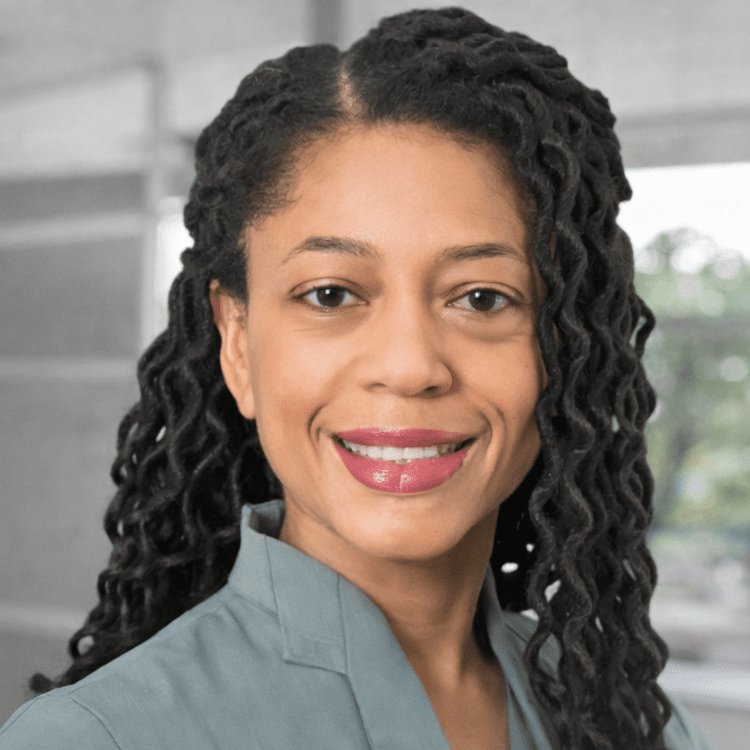
Heidi Lynne Kurter
Digital.ai
“It is okay to pause and process and get your information from different ways at different times.”
Heidi Lynne Kurter has been named to the Talent 100, Class of 2026, the annual award recognizing up to 100 leaders in each category of talent acquisition. Honorees are nominated by peers or found by committees that look for excellent work wherever it happens, then chosen for the depth of their craft and their impact on hiring. This is Heidi's story.
Ask Heidi Lynne Kurter what happens at Digital.ai when someone resigns, and she will not start with a job requisition. She starts with a question: is this still the role we need? That single reframe has become the center of how she thinks about talent, and it explains why her work now sits at the seam where recruiting, onboarding, and workforce strategy meet.
Kurter came up hands-on. Before she stepped into leadership she spent years doing the work herself, sourcing, screening, closing, building the muscle memory that no amount of strategy decks can substitute for. Today her remit has widened. She oversees onboarding, a function that coordinates closely with recruitment at nearly every touchpoint, and she coaches managers through the decisions that happen at the other end of the employee lifecycle, when talent leaves and the organization has to decide what to do about it.
The Backfill Question
Most organizations treat departures as a hole to be plugged. Kurter treats them as a design opportunity. When someone exits the business, she sits with the hiring manager and works through a deliberate sequence: do you need these exact skills, or is that simply the shape the job happened to take? Does the role need to evolve to get the team where it needs to go? Can the responsibilities be parsed out strategically across the existing team rather than reassembled into the same job description?
It is a discipline that requires patience and a willingness to slow a manager down in a moment when they want speed. It also requires credibility, which is why Kurter invested so heavily in learning the functions she supports. Her view is that a talent leader who cannot speak intelligently to a role has no standing to challenge how it is defined.
Germany, and the Cost of Credibility
The formative chapter came when Kurter was living in Germany and had to dive into technical recruiting. She did not arrive with a technical background. She built one, learning the terminology and the substance of the work because she understood that credibility with engineers is earned, not assumed. "I needed to gain credibility with the people that I was speaking with," she says of that period.
She had help. A leader there, though not a recruiter himself, played an unusually active role in hiring because he genuinely cared about talent. He worked hand in hand with her, not to make her an expert in every detail of every role, but to ensure she could speak to each one confidently. The lesson stuck and generalized well beyond engineering. Kurter came away convinced that she needed to understand roles across the business, finance and marketing included, with the same seriousness she had brought to technical hiring.
A Deliberate Skepticism About AI
In an industry sprinting toward automation, Kurter's position is considered and firm. Digital.ai, by her account, tries not to use AI in its recruitment process, and the reason is bias. It is a stance that costs speed and buys something else: confidence that the humans making hiring decisions are actually the ones making them.
She is watching the alternative unfold through friends who have been laid off or separated and are now navigating the market. They apply, receive a link, and record answers into a void. There is nobody on the other end. Kurter has not been through one herself, and she is honest that she does not know how she would feel if she were. What she does know is that it represents the single largest shift she has observed in how hiring is conducted, and she is not rushing to adopt it.
Permission to Pause
Her advice to talent leaders heading into 2026 is not about tooling. It is about attention, and it is quietly countercultural. The volume of AI content aimed at talent professionals has become, in her word, inundating: webinars, workshops, articles, headlines, an endless scroll of things TA leaders should be doing. Kurter's counsel is to whittle it down.
It is genuinely acceptable, she argues, to pause the inbound entirely for a stretch and choose one channel instead, perhaps only attending networking events such as ATD gatherings and gathering information there. "It is okay to pause and process and get your information from different ways at different times," she says. She frames it plainly as a mental health issue. The constant drumbeat of change is exhausting, and exhaustion is not a strategy. Leaders who protect their capacity to think will make better decisions than those who simply consume more.
It is a fitting philosophy from someone whose defining professional instinct is to stop, ask whether the obvious move is the right one, and only then proceed.
The Talent 100 exists to celebrate the people shaping the future of how the world hires, and few embody that better than Heidi. We are honored to welcome Heidi Lynne Kurter to the Talent 100, Class of 2026, and grateful for the experience, perspective, and craft they bring to this community. Congratulations, Heidi. Welcome to the Talent 100.
About the Talent 100
The Talent 100 is an annual list spotlighting the leaders who push HR and talent acquisition forward, organized by Noon AI. Honorees are selected through peer nominations and independent selection committees. Selection is entirely merit-based, with no fees or pay-to-play requirements.