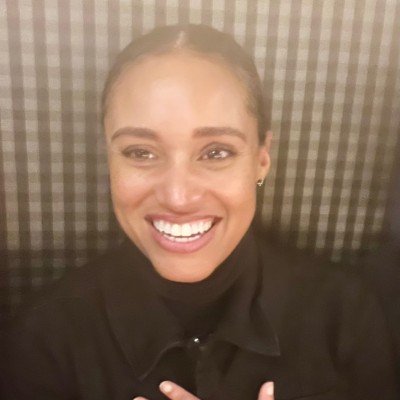
Jim Miller
Ashby
“You are the expert in your space. Go do that work.”
Jim Miller has been named to the Talent 100, Class of 2026, the annual award recognizing the 100 most exceptional leaders and practitioners in talent acquisition. Honorees are selected by the Talent 100 committee from thousands of nominations and candidates across the industry, chosen for the impact of their work, the depth of their craft, and their influence on the future of recruiting. This is Jim's story.
Nearly 5,000 people have worked for Jim Miller over the course of his career. At Google alone, where he spent 15 years, he built a recruiting function from scratch and grew it to roughly 250 people. That scale traces back to a London agency floor 25 years ago, almost to the month. Today, as Vice President of Talent Acquisition at Ashby, Miller sits at the intersection of the craft he learned by hand and the technology now rewriting it.
It is an unusual vantage point. Miller is a practitioner with a quarter century of hiring behind him who now works inside a technology company building for the profession he came from. That dual perspective shapes how he reads the current moment, and why he is far more interested in where AI legitimately fits than in the daily churn of announcements about what it might one day do.
A Friend, a Job in London, and Twenty-Five Years
Miller's entry into the profession came through a friend rather than a plan. He was working in the insurance industry and could see the direction his role was heading. A close friend already in the talent acquisition space made him a proposition: you are good with people, you have a logical brain, and there is a company hiring in London. He would send Miller in to meet them.
The company, as Miller describes it, was Allegis, Aerotek, TEK Systems, the biggest private staffing company in the world. He got the job and stayed five years. Those years, he says, are what made him as a recruiter. Everything that followed, including the Google function he would later build and lead, traces back to the fundamentals he absorbed on that agency floor.
That office produced more than one career. Miller was there alongside Marcus Thorpe, now at ThoughtWorks, Dave Moore, now Head of Talent at Box, and Ian Sharpe, now a talent partner at Andreessen Horowitz, where he builds the talent technology strategy behind the firm's portfolio companies. "We were all in agency together in the same office," Miller says, "and then we've all gone on to these different jobs." Twenty-five years later, they are still in each other's orbit.
Three Leaders, Three Lessons
The leaders who shaped Miller come with specific lessons attached. The first is Tom Briley, his first recruiting leader, the account manager and business development manager who taught him everything in those early agency days. Briley's discipline was quality over quantity: the best candidate gets the job, so put your effort into the highest quality candidates. He held to submitting one person per role, a practice Miller calls almost unheard of in an agency environment. It has shaped the rest of his career.
The second is Ian Sharpe, his first leader at Google. Sharpe brought a thoroughness and an attention to detail to Miller's work that, in Miller's own assessment, simply were not there before. He also opened doors inside Google that Miller says he would not have had a chance at otherwise, a sequence that led directly to Miller leading a function he built from nothing a couple of years later. "A huge, huge influence and impact on my career," he says.
The third is Benji, his current CEO at Ashby. What Miller found eye-opening was Benji's approach to the structural problems of talent acquisition. The profession, Miller came to see, has spent years solving certain problems by brute force, throwing large numbers of humans at work that never stopped requiring humans. "The problem always exists," he says. "The real innovation is how you can use technology to solve it rather than humans." In the current environment, he adds, that reframing is more pertinent than ever.
Assistive, Not Selective
Miller sees an unusual volume of what is happening in the market because of where he sits. The shift that interests him most is the one he did not expect. There were parts of the hiring process where he believed AI had no legitimate place, largely because of legislation and compliance. Watching AI enter those spaces anyway, but in a fundamentally different posture, has been the revelation.
His formulation is precise and worth borrowing: the technology that works is assistive rather than selective. It supports the humans making the decision instead of making the decision for them. That distinction, to Miller, is the most interesting element of the entire landscape right now.
He is candid about the noise. Numerous articles land every day promising that agents will handle this or that. The suppliers and the individuals actually having impact, he argues, are the ones who recognize that constraints and boundaries exist, that legislation has drawn real lines, and who fit their technology to a human-centered approach to recruiting rather than the other way around. That, he says, is the exciting part of a changing landscape.
Do the Boring Work First
Miller's advice to talent leaders, at any company size, is built on a prediction. At some point a CEO, a CFO, or a head of people is going to arrive with a mandate: push AI through your organization, deliver this impact, and expect this many people left afterward. His counsel is to be ready long before that moment arrives.
That means doing the due diligence to protect your organization before you are pushed into being asked to do something. Understand the legislative landscape for every jurisdiction your company operates in. Map the full variety of use cases where AI could be applied across your talent process and ecosystem. Then take that work back and present it to senior leaders on your own terms.
"They don't know what they don't know," Miller says of executives issuing those mandates. "You are the expert in your space. Go do that work. Take it up." And do not skip the unglamorous parts. The legislation and compliance pieces are precisely where a talent leader's expertise and interpretation become decisive, and where the business either succeeds at the change it is driving or does not.
The Long View
What distinguishes Miller is that he holds two things at once without strain. He learned recruiting in an era of one carefully chosen candidate per role, and he now works inside a company building the software meant to scale that judgment. He does not treat those as opposing loyalties. The lesson from Tom Briley about quality and the lesson from Benji about technology are, in his telling, the same lesson viewed from different decades.
He is also unusually generous about his peers. Invited to name three recruiting leaders worth watching, Miller could not stop at three. The list ran to more than a dozen, among them Laura Barnes, Vice President of Talent Acquisition at Flock Safety, Tommy Hansen, Luke Eaton at Ava Labs, Niti Williamson at Dext, Nick Weatherhead at StepStone Group, Randy Lynn at Fullstory, Tim de Wong at Lovable, Sean Lee at JFrog, and Christopher Dobbins. The descriptions came from real relationships rather than titles. One he learns from every day. One keeps him honest. One has the best black book in recruiting, having written down the name of every single person he ever speaks to. One he goes on vacation with.
After 25 years and nearly 5,000 people, that may be the truest measure of the career Miller has built: not the headcount, but how many of the people in it he still wants to put a spotlight on.
The Talent 100 exists to celebrate the people shaping the future of how the world hires, and few embody that better than Jim. We are honored to welcome Jim Miller to the Talent 100, Class of 2026, and grateful for the experience, perspective, and craft they bring to this community. Congratulations, Jim. Welcome to the Talent 100.
About the Talent 100
The Talent 100 is an annual list spotlighting the leaders who push HR and talent acquisition forward, organized by Noon AI. Honorees are selected through peer nominations and independent selection committees. Selection is entirely merit-based, with no fees or pay-to-play requirements.