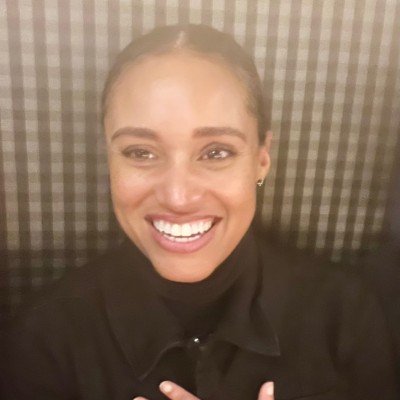
Jen Ayala
Clay
“Screening in versus screening out is my philosophy around AI.”
Jen Ayala has been named to the Talent 100, Class of 2026, the annual award recognizing the 100 most exceptional leaders and practitioners in talent acquisition. Honorees are selected by the Talent 100 committee from thousands of nominations and candidates across the industry, chosen for the impact of their work, the depth of their craft, and their influence on the future of recruiting. This is Jen's story.
Most children at the dinner table are told to be polite to the guests. Jen Ayala was quietly evaluating them. Her father was an entrepreneur, and his candidates were often invited home for dinner, which meant that by the age of eight or nine she was sitting across from strangers who wanted to work for him and then telling him afterward what she thought. She was right a lot of the time, and she knows it, because she watched how those hires turned out inside his companies.
What she absorbed at that table was not a technique. It was a question: how do people decide who to work with? Decades later, as Head of Talent at Clay, she is still chasing the answer, only now she is doing it with AI, structured projects, and a conviction that the industry is pointing its newest tools in exactly the wrong direction.
"I always wanted to be a recruiter," she says. "I feel like there's very few people who can say this."
From the Classroom to the Terminal
The childhood fascination went dormant for a while. After college, Ayala joined Teach For America and found herself teaching in New York City, where one of her extra responsibilities was helping her school hire. It turned out to be the most interesting part of the job. The school was a charter, and hiring teachers in New York at that moment was genuinely difficult, so she worked the hiring fairs, thought hard about employer brand and how a small school could stand out, and then took on the harder problem: how do you actually interview a teacher?
That question absorbed her. Classroom management and content mastery are the two things that matter, and neither shows up on a resume. Her challenge was to replicate the real experience in a demo format, one designed less to catch people out than to give them a chance to shine. It is the same instinct that governs her work today, arrived at years before she had the vocabulary for it.
Somewhere in the middle of that work the memory came back. "Wait, this is what I want to do with my life," she recalls thinking. She went to a recruiting agency startup, then cut her teeth at Bloomberg, where she helped build out the AI team and essentially the entire AI function. She later moved into startup life at Bubble before joining Clay. The path reads as varied, but the intent never wavered. "It was very intentional," she says. "I want to do this. This is the job I want."
The People Who Built the Recruiter
Ayala is unusually generous about who taught her what. The first name she offers is Lauren Rubinoff, her manager at Bloomberg. Rubinoff had just stepped into management and Ayala was her very first report, a pairing that turned into a long working relationship and, by Ayala's own account, the foundation of everything she knows. Rubinoff drilled the table stakes recruiting fundamentals, then pushed something less common: get to know your business and stay genuinely curious about what the team is actually building. She also celebrated Ayala for going deep on the technical side rather than staying safely on the surface. That is why the AI function at Bloomberg came together the way it did. Ayala understood the problems those engineers were solving. Rubinoff also coached her through becoming a people manager for the first time, and Ayala still turns over lessons Rubinoff shared with her years ago.
The second is Heather Dochay, formerly head of people at Webflow and a talent partner at Signifire, now running her own business. Signifire were investors in Bubble, and when Ayala arrived there Dochay took her under her wing. The move from a large technology company into startup world is a specific kind of whiplash, and Dochay helped her navigate it while Ayala built recruiting and people programs from scratch. "She's one of the fastest talkers, smartest people I've ever encountered," Ayala says, with obvious affection.
The third is Varun, co-founder and COO at Clay. Six months in, Ayala describes the effect in plain terms: she is doing the most interesting and inspiring work of her life because she reports to a leader who cares deeply about hiring and refuses to let the team hire the way everyone else does. He has an unending energy for the company and for the people inside it, and he keeps pushing the talent function to think about hiring differently than any other company has. Ayala is candid that this is a privilege, not a given.
Screening In, Not Screening Out
Ask Ayala about AI in recruiting and she warns you, cheerfully, that she has hot takes. The industry is using AI for sourcing, she says, and mostly doing it wrong. The dominant applications are generating outreach copy and parsing person level data, and the pitch landing in her inbox from vendors is almost always some version of let AI fix your sourcing function. Her objection is directional. "We should be using AI to expand who can be considered by a company rather than to narrow it down."
The alternative she describes is less glamorous and far more useful. Use AI to summarize interview scorecards so a team can finally see what hiring managers are actually looking for. Use it to understand company metadata, so that a candidate's history can be read through what a company was doing at the time they were there rather than through the self report on their LinkedIn profile. Use it for automation and for making recruiters more knowledgeable about their own business.
At Clay, the philosophy is already operational. For one high volume role, the team replaced send us your resume with an invitation to complete a reasonably short project. Candidates are evaluated on the work, not on a resume or on how a phone screen with a recruiter happens to go. Plenty of companies would have solved that volume problem by bolting on an AI recruiter. Clay uses AI to understand the projects instead. "Screening in versus screening out," she says, "is my philosophy around AI."
For all the acceleration, Ayala is clear that the human specification has not moved. You still need people who are low ego, because the job is changing fast enough that nobody can cling to the parts of their role that may soon be automated. You still need people who are adaptable, because tools have always been changing. These were the traits that mattered in hiring ten and twenty years ago, and they are the traits that matter now.
All Recruiting Is Executive Recruiting
Her advice to other talent leaders begins with something that can sound soft until you follow the logic. Be highly empathetic. Ayala calls it the single most important attribute a talent leader can have, and her reasoning is unsentimental: everything is getting faster and easier with AI, but the object of the work is still people deciding what to do with their lives. Those decisions reshape careers, families, and the arc of an entire life. Stay empathetic to everyone your work touches.
The tactical version of the same idea is her sharpest line on where the profession is headed. All recruiting, she argues, is becoming executive recruiting. The bar for relationship building, care, and craft that used to apply only at the top of the org chart now applies everywhere, precisely because automation has made the alternative so cheap and so obvious. Making a candidate feel like a human is no longer a nicety. It is the differentiator.
"Highly empathetic, executive style recruiting for everyone," she says. It is the eight year old at the dinner table, grown up and given a budget.
The Talent 100 exists to celebrate the people shaping the future of how the world hires, and few embody that better than Jen. We are honored to welcome Jen Ayala to the Talent 100, Class of 2026, and grateful for the experience, perspective, and craft they bring to this community. Congratulations, Jen. Welcome to the Talent 100.
About the Talent 100
The Talent 100 is an annual list spotlighting the leaders who push HR and talent acquisition forward, organized by Noon AI. Honorees are selected through peer nominations and independent selection committees. Selection is entirely merit-based, with no fees or pay-to-play requirements.