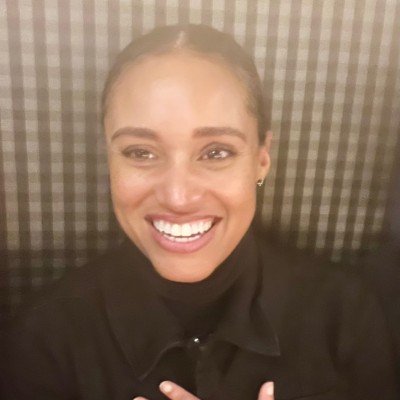
Heidi Eckersley
Kantar
“Happy recruiters hire great people.”
Heidi Eckersley has been named to the Talent 100, Class of 2026, the annual award recognizing the 100 most exceptional leaders and practitioners in talent acquisition. Honorees are selected by the Talent 100 committee from thousands of nominations and candidates across the industry, chosen for the impact of their work, the depth of their craft, and their influence on the future of recruiting. This is Heidi's story.
Heidi Eckersley's career in talent began with a gap of ten months. She had trained as a designer, qualified as a design and technology teacher, and had time to fill before a teaching post started. She walked into a recruitment agency looking for a temporary job. They offered her one of their own instead, and she never went back to the classroom.
What followed was ten years in agency recruitment, then a move in-house, and eventually a remit at Kantar that spans transformation, technology, and team building at scale. Along the way she has developed a conviction that separates her from much of the current conversation about artificial intelligence in hiring: the technology is not the starting point. The workflow is. And the people doing the work get the final vote on whether anything gets adopted at all.
From Design Studio to Deal Table
Eckersley is candid that she never set out to be a recruiter. She went to university to study design and taught design and technology in a school. The recruitment agency job was meant to be a stopgap, but progression came fast and early, and the maths of staying began to outweigh the plan of leaving. She stayed.
The decade in agency gave her a foundation that in-house recruiters rarely get. She travelled extensively and worked at the most senior end of the market, running searches where the stakes were measured in organisational direction rather than headcount. Eventually she concluded that agency life was not where she wanted to build, and she moved in-house.
That second act has been, in her own description, a fortunate one. She has run multiple transformations, led large teams, implemented technologies, and built functions from scratch. "You name it, I've done it," she says, and the list backs her up. At Kantar she is currently in the middle of a significant two-year transformation, the kind of programme that requires both executive sponsorship and the operational credibility to make it stick.
The People Who Backed Her
Ask Eckersley about the influences that shaped her and she does not reach first for famous names. She reaches for clients. On the agency side, it was a handful of exceptional clients who invested in her and handed her work that no external consultant would normally touch: advising CEOs on what their internal talent should look like, helping design organisational structures, sitting inside strategy rather than adjacent to it. Those engagements gave her a strategic perspective that most recruiters never acquire, and they permanently changed the altitude at which she operates.
In-house, the pattern held. She credits her heads of talent acquisition and, more broadly, every leader she has reported to. What they gave her was not instruction but latitude. "I've sort of been able to do more than a lot of other people have been able to," she says. "Maybe that's just because I've been trusted to do that." She names her current Chief People Officer as a case in point: he is the reason she has been able to run the current two-year transformation with real authority rather than partial permission.
She is equally clear-eyed about the harder stretches. There have been difficult people and growth areas, and her position on them is brisk and unsentimental. No one is perfect. You learn from it and you move on. It is the same practicality she brings to technology decisions.
Human Data, Human Decisions
On AI in hiring, Eckersley resists both the evangelism and the alarm. Her honest read is that the industry is still working it out, that nobody has yet settled how AI should fundamentally be used in a recruitment process. What she is certain about is the ethical frame around the question.
"We're managing human data and we're making life decisions," she says. That framing dictates the boundary. In her team, AI augmentation has been genuinely successful, and it has been deliberately pointed at the highly administrative workflows rather than at judgment itself. The purpose is not to remove people from the process. It is to create more space for human judgment and human interaction, by clearing out the volume of low-value work that crowds them out.
It is a distinction that sounds modest and is actually structural. Eckersley is not automating hiring. She is automating the friction around hiring so that the parts requiring a human being get more of a human being.
Diagnose the Friction, Then Buy the Tool
Asked what she would tell other talent leaders heading into 2027, Eckersley identifies the challenge she thinks is most likely to trip them up: saturation. The market is flooded with new and shiny AI products, and the danger, if leaders are not careful, is getting excited about technology for technology's sake or AI for AI's sake.
Her prescription reverses the usual sequence. Start with the workflows. Map them. Find where the friction actually lives. Only then go looking for the solution that removes it. Anything else is a purchase in search of a problem.
The second half of her method is the part most organisations skip. Eckersley trials everything before adopting it, and she gives the verdict to the recruiters themselves. If they are not telling her a tool makes a fundamental change to their day-to-day operations, it does not get adopted. Full stop. The design principle is that everything must be centred on recruiters and how they actually operate, because the experience of the people running the process determines the experience of everyone touching it. As she puts it, happy recruiters hire great people.
Her advice compresses into three moves: understand your workflows, understand where the friction is, use technology and AI to relieve that friction, and ensure the people actually doing the work are part of the process. Coming from someone who has implemented technologies across multiple transformations and built teams from nothing, it reads less like a philosophy and more like hard-won operating instructions. It also explains why an exceptional candidate experience, a good experience for hiring managers, and a good experience for recruiters are, in her model, the same project viewed from three angles.
The Talent 100 exists to celebrate the people shaping the future of how the world hires, and few embody that better than Heidi. We are honored to welcome Heidi Eckersley to the Talent 100, Class of 2026, and grateful for the experience, perspective, and craft they bring to this community. Congratulations, Heidi. Welcome to the Talent 100.
About the Talent 100
The Talent 100 is an annual list spotlighting the leaders who push HR and talent acquisition forward, organized by Noon AI. Honorees are selected through peer nominations and independent selection committees. Selection is entirely merit-based, with no fees or pay-to-play requirements.